Monday, October 30, 2017

Issue 12

THE BRETON/GEROL NEWSLETTER


TRUMP: A BULL IN A CHINA SHOP


In less than a year Donald Trump has managed to damage US relations with allies and partners on the international scene: Mexico and Canada have been forced to demonstrate incredible fits of political creativity just to keep NAFTA afloat, the EU is strongly opposing the White House attempts to undermine the delicate deal 6 countries and the EU signed with Iran under President Obama and the continuing deterioration of relations with Russia practically resurrected the Cold War between Washington and Moscow.

In many ways this conflict-ridden approach extends inward, into the heart of American political life. There are strong indications that State Secretary Rex Tillerson is about to resign or be fired. His recent denials only confirmed those suspicions. One of the candidates to replace him is Nikki Haley the current American Ambassador to the UN. She is not known for a nuanced approach and that may increase her chances of being picked for the job by Trump. More troubling is an assumption expressed several times already by The Washington Post and New York Times that the departure of Tillerson could be followed by resignations of other key members of Trump's cabinet like Secretary of Defense James Mattis, General Kelly and others. If that is to happen the replacements could easily bring about lesser caliber politicians without any serious influence on the President.

In such an unstable and unpredictable situation it becomes infinitely more difficult to tackle such urgent and complex matters as the Korean crisis, US-Russian discord, the Middle Eastern quagmire and delicate relations with China.


--o--

RUSSIAN ELECTIONS: "WE HAVE OUR OWN HILLARY"
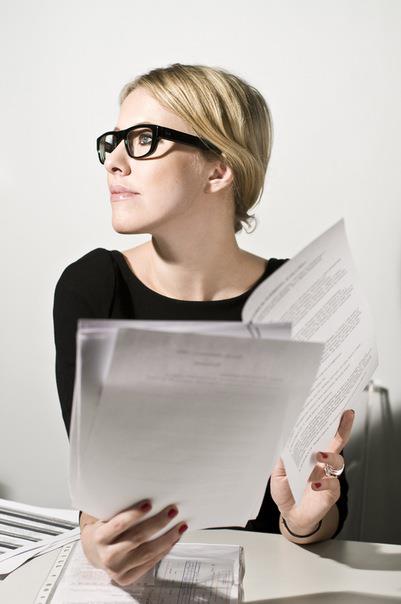
Facebook Profile
Ksenia Sobchak a well-known socialite and TV personality announced her decision to run for the presidency of Russia. It took everyone in the Russian political establishment by surprise. While the official opposition as a rule nominates old non-entities like Zyuganov, the head of the Communist Party and Zhirinovsky, the leader of the so-called Liberal-Democrats, the real opposition figure was considered Alexei Navalny, a strong anti-corruption crusader and political nemesis of Vladimir Putin. Ksenia Sobchak is adored by a younger generation of Russians, as well as by the artistic and literary communities and people with more modern and pro-Western outlook. At the same time being the daughter of Anatoly Sobchak, former mayor of St. Petersburg and political mentor of Putin, she enjoys personal relations with the President and his inner circle. Ksenia's candidacy gained the support of such a senior and influential political observer as Vladimir Pozner and even some representatives of the ruling elite.

Many in Russia however believe that Sobchak's wild card entry had been designed to sideline the uncompromising Navalny. One thing is for sure:elections in Russia will be more entertaining than previously imagined. Also, no one on the other hand should doubt that Putin will be re-elected again.


--o--

UKRAINE, MISHA THE MESSIAH?


The main event of the last few weeks is the return of Mikheil Saakashvili to Ukraine and, after his tour of major cities, the launch of a protest action in proximity to the Rada (Parliament) building in Kyiv.


Saakashvili, with two supporters, in front of his tent by the Rada building, October 29th
Facebook posting

In his bid to consolidate opposition forces, Saakashvili has gathered support from some political parties across the spectrum and from some local leaders. His speeches and protest actions are well-attended, but it would be exaggerated to refer to massive support in the population. Saakashvili initially focussed his demands on three elements: the establishment of anti-corruption courts, canceling parliamentarians’ immunity from prosecution and adopting a new electoral law that would decrease the influence of oligarchs on elections. He now tends to insist more broadly on a post President Poroshenko, post-oligarchic Ukraine. He is in regular conflict with the Prosecutor General, but there is no sign that the authorities would go as far to deport him, as they have done with some of his Georgian associates.

According to one of the latest public opinion polls, Saakashvili’s personal rating in Ukraine is below 2%. The revocation of his Ukrainian citizenship by President Poroshenko has re-energized him and brought him back into the limelight, but has not made him a unifying widely popular figure. In the midst of this Saakashvili diversion, Ukrainians are left to look elsewhere for new, more credible political leadership. At present, there is, however, no strong home-grown political leader in sight. Former Prime Minister Tymoshenko, the main opponent and first declared presidential candidate for 2018, seems stuck at around 8%. Poroshenko may have moved above the 10% rating, but seems unlikely to move up any further.

In a context where national political figures are not in a position to lead new initiatives, the good news is that some regional governments have taken advantage of the additional budgetary resources made available to them through the recent decentralization process. This has resulted, in some instances, in more effective local governance and more significant investments in local infrastructure projects. These are positive developments that could have a beneficial long-term effect. In the meantime, they could, however, diminish the interest in the search for a renewed national leadership and channel political activism to the regional level. Irredentism exists in some regions other than the Donbass, but is not yet a major issue. This is not a Catalonia-like situation.

At this stage, it is unclear what will be the outcome of Saakashvili’s political efforts and, with less than a year before the next presidential election, what President Poroshenko can reasonably expect to do other than to complete his mandate and perhaps make it to the second round of the presidential ballot in a crowded field of weak candidates. In the current context, one could see the next President of Ukraine elected “by default”, in the absence of a strong popular contender. Oligarchs who traditionally have heavily influenced national politics may not necessarily have a problem with a president with a weak popular mandate and without strong parliamentary support.


--o--

25 WASTED YEARS: WHO IS TO BLAME?


President Putin in Sochi, October 19th
President of Russia Website
In the speech he delivered in Sochi on October 19th,.Vladimir Putin describes the past 25 years this way: “Two and a half decades gone to waste, a lot of missed opportunities, and a heavy burden of mutual distrust.”  As could be expected, the speech received mixed reviews, with some commentators even choosing to focus on a sidebar, one of Putin’s answers in which he remarked on the need to “show respect for the legally-elected US President, even if you disagree with him”. 

As part of its negative take, the speech contains many recriminations against the US and, as such, may turn off Western audiences. Beyond the recriminations, the speech contains a few interesting observations that are useful in understanding why we are now back in a cold war situation. Some observations also need the occasional additional explanation.

One could simply say that we have a new Cold War because there are now fundamental disagreements between Washington and Moscow. Disagreements are unavoidable. The deterioration of relations we now observe might have been avoided.

In one of his answers Putin said: “Our most serious mistake in relations with the West is that we trusted you too much. And your mistake is that you took that trust as weakness and abused it.” The first part of the quote about “too much trust” essentially refers to the decade from the end of the Soviet Union to the bombing of Belgrade by NATO in 1999. The negative perception of that period was re-emphasised by Putin’s sharp criticism of then Russian Foreign Minister Kozyrev whom he described as “having a cranium, but no head”.

Putin mentions specifically the bombing of Belgrade. What is not explained is the extent to which that bombing was a turning point in the minds of the Russian leaders. The justification for the action is not the issue. This is when Russians realized for the first time that they trusted the West too much. Even independent-minded Solzhenitsyn observed on this later on. The change in the Russian mindset has not been reversed.

Putin also makes a reference to NATO: “We were confronted with the redistribution of spheres of influence and NATO expansion. Overconfidence invariably leads to mistakes. The outcome was unfortunate. ”

In 2001 in the aftermath of the 9/11 terror attack, the atmosphere was conducive to the creation of the NATO-Russia Council. There was great hope that this would be game changer: cooperation would eventually replace confrontation. In fact, it has changed virtually nothing. The tipping point that would have permanently altered the NATO-Russia relationship was never reached. Inertia, the weight of NATO as an institution and the perception of Russia as the enemy were simply too great. Besides, for former Soviet Bloc countries, for which NATO accession had been an existential matter, partnering with Russia seemed like giving up what you just gained. Here also, in NATO circles, the mindset is still the same.

Putin also mentions the invasion of Iraq, that happened without UN Security Council approval as an occurrence of a split between East and West. He, however, does not mention the Yukos, affair. It is not the jailing of Mikhail Khodorkovski that matters so much here. The Yukos affair marks the failed attempt by  Exxon to acquire a controlling interest in a major Russian oil company, that was considered as one of the “jewels of the Crown”. Russia did not agree with the invasion of Iraq and encountered some economic losses as a result of the collapse of the Saddam regime. What matters more that with the arrival of Putin in 2000 Russia began to take a more nationalistic and statist economic policy and to defend its national interests more aggressively. Putin’s Russia would not let the US take over what it considered a strategic asset. The decision reportedly greatly upset the then Republican leaders, Vice-President Cheney and former Senator Robert Dole. The disappointment over not finding a compliant partner was going to reverse whatever positive trend may have existed and affect durably the Washington outlook for years.

Georgia and Ukraine were going to be difficult when a new generation of leadership would take over and wish to address the future of the countries and their place in the world. The context of competition rather than partnership having been re-established, it would have taken miracles of preventive diplomacy for the situation in Georgia (in 2008) and Ukraine (more visibly from 2014) not to have led to a heightening of tension between the US and Russia.

Yet, it would take a forthcoming Russian victory in the context of its military involvement in Syria along with the allegation of meddling in US elections to take us fully into the new Cold War.

There is enough blame to distribute to everyone involved. The diagnosis in Putin’s speech is unfortunately right, we have to contend with a heavy burden of mutual distrust. Dialogue might be one way to alleviate the distrust. The problem is compounded by the fact that the US president is not in position to engage credibly in such a dialogue. European leaders have to take up the slack. As for Canadian leadership, whereas it is right to focus on support for Ukraine, it has not found it possible to engage in a meaningful dialogue.


--o--

GERMANY-RUSSIA: AN OCCASION TO CELEBRATE


President Steinmeier addressing the congregation
St. Peter and St. Paul Cathedral, Moscow, October 25th
Facebook posting

The German President, though the most senior representative of the German State, is at times perceived an an honourary figure for his “above politics” ceremonial functions. Former Foreign Minister Steinmeier is, however, not just any President. As a political ally of Chancellor Merkel, his October 25th first visit to Moscow as President brings an additional dimension to the political dialogue between Germany and Russia. It also serves to underline the highly symbolic gesture of returning to the Evangelical Lutheran Church in Russia the full ownership of the St. Peter and St. Paul Cathedral. The symbolism is enhanced by the coincidence with Reformation’s 500th anniversary. Less symbolic, but no less important, is the fact that Germany-Russia bilateral trade, after declining by 11 percent in 2016, is up by 25 percent in January-July 2017. The inflow of direct investments from Germany has also increased: for the first quarter of 2017 alone they reached $312 million, by comparison to $225 million for the same period in 2016. So much for “tougher” sanctions.

President Steinmeier remarks at the press conference after his meeting in the Kremlin are worth quoting: “In any case, I am convinced that we need to overcome the alienation that has set in between our countries in the past years. To do so, it is necessary to continue our dialogue. There must be long-term attempts on both sides to find solutions to overcoming crises.”


--o--

NORTH KOREA: LONG TREATMENT OR SURGERY?


"If Kim Jong-un suddenly dies don't ask me about", Mike Pompeo, the CIA Director said recently.
While it could be interpreted as a CIA-style joke, it actually reflects two radically opposing views on how to deal with the North Korean nuclear threat. President Trump and some of his ardent supporters in the intelligence community, not the military, believe that a massive attack on governmental, industrial and military targets together with decapitating strikes against Kim and his inner circle in party and state would win the day.

People like Rex Tillerson, James Mattis are openly opting for a coordinated blockade of North Korea by US, Japan and South Korea with Russia and China abstaining from active opposition. This month's election in Japan brought Prime Minister Abe an absolute majority that will allow him to transform the self-defence force into a modern and powerful army. Japan wants to be more active in squeezing North Korea to abandon its nuclear program. South Korea meanwhile still has to be convinced that its strong desire to have some sort of dialogue with the North is nothing but an illusion.

Less known is the fact that North Korea is completing its own strategic plan to survive a nuclear war. The regime announced the construction of 2,000 hermetic shelters where maybe not the whole population but the elite could survive for some time. Despite the obvious idiocy of that project it shows that Pyongyang is determined to go ahead with its nuclear program. The fate of Saddam Hussein and Qaddafi, who were forced to abandon their nuclear aspirations, has been taken seriously by the North Korean regime.

Meanwhile one can distinguish the appearance of some pro-North Korean sentiments in Russia and China. If the solution to the crisis is not be found soon, the North Korean issue will add to a long list of problems dividing East and West.

According to Washington sources former US President Jimmy Carter (age 93) is planning to visit North Korea to meet with Kim. This move offers little hope, but it is still better than Pompeo's morbid sense of humor.


--o--


KING SALMAN IN THE KREMLIN


King Salaman and President Putin, Moscow, October 5th
President of Russia Website

King Salman made history by becoming the first head of the House of Saud to visit Moscow. The fact of this visit can be interpreted as a political achievement of Vladimir Putin. This meeting confirmed Russia's return to the Middle East as a top political actor. The outcome of the Syrian crisis proved to the Arab world that they cannot be reliant solely on the United States. Considering that Riyadh sees Iran as the existential threat, the Kingdom wants to weaken the alliance between Russia and Iran. That is why King Salman agreed to rapidly increase Saudi investments in the Russian infrastructure while inviting Moscow to participate in several ambitious projects. Saudis also purchased the state of the art Russia's air defense systems (S-400). From the Russian point of view the historic visit by the King is another demonstration that Russia is not limiting itself to a relative closeness with Iran and is ready to do business with many regional powers. The Government-controlled Iranian press had an overall negative take on the visit.


--o--


PERSON OF THEMONTH: XI JINPING


The Congress of the Chinese Communist party has just concluded in Beijing. The Congress re-elected Xi Jinping as the Secretary General of the Central Committee of the Communist Party, that automatically makes him President of People's Republic of China. This Congress could be considered a historic one as it places Xi into a very exclusive pantheon of core leaders such as Mao Zedong and Deng Xiaoping. Like for them, Xi's ideas have been enshrined in the Party Constitution. To consolidate his power Xi replaced 5 of 7 members of the Politburo, the Party's ruling areopagus. In addition he conducted an unprecedented purge of the military command and regional party elite, using the pretext of old age or corruption.

The platform presented by Xi to the party Congress combined realism and ambition. Xi's vision of the future of China incorporates two objectives: to make China wealthy and an influential global power, as well as to carry on its own development project that does not imitate Western models.

Xi enthusiastically promotes Chinese experience and achievements in the developing world. China has now become a leader of international investments: it carries out various economic and infrastructural projects in over 90 countries (for comparison US does it in 57).


It is more likely than not that Xi Jinping will break with ongoing tradition limiting leaders to only two terms in power. Also one could envision that under President Xi China will eventually restore the global structure of a bipolar world by becoming the second superpower.

--o--

BRIEFLY NOTED


RUSSIA


Sergei Shoigu, Russia's Defense Minister announced the end of military operation in Syria. Though it is not the first time similar announcements have been made by Moscow, this time around it looks more plausible. President Assad, with the help of Russian military (Air Force, Special Forces and advisers) restored control of almost 70% of Syria while American-led coalition crushed IS in Raqqa and the North East.

Unfortunately this is not the end of the Syrian conflict. The country is being split into at least two parts. One with the government in Damascus and another one in Raqqa where the democratic opposition will attempt to form a new administration. 

Both sides will try to negotiate in the framework of Geneva and Astana formats.

Large-scale military action by all sides in Syria had subsided drastically since the recent downfall of ISIS. New hostilities are highly probable between newly formed players. The presence and cooperation between such powerful military entities like the US, Russia, Turkey and Israel may, however, lead the participants towards a more peaceful resolution of this complex and violent conflict.

UZBEKISTAN


This important Central Asian country started a period of financial, economic and political liberalization. For the first time since Uzbekistan became an independent state (in 1991) government allowed free currency exchange, initiated broad programs of privatization and endorsed large-scale foreign investments. One of Uzbekistan's main industries is cotton. The country is on the path of massive mechanization and upgrading process in this area. The government is looking for high-tech solutions and serious investments into this industry. 

Rustam Halilov, financial analyst in Tashkent explains: "When Uzbekistan was part of the USSR we manufactured Tupolev passenger jets now we want to re-start this aviation-building industry. We need cooperation with Western companies and investments. We also have more developed industries such as gold mining and gas exploration that nevertheless need upgrading and infusion of high-tech innovations that requires serious investments."

New President Shavkat Mirziayev announced that 2018 will be officially declared 'Year of Investments" and that Uzbekistan will open its doors for international business on an unprecedented scale.

ARMENIA-AZERBAIJAN


Armenia's president Serzh Sargsyan and his Azerbaijani counterpart Ilham Aliyev met recently in Geneva in an attempt to restore regularity of contacts aimed at containing potentially explosive conflict between the two nations over the Nagorno-Karabakh. This area, populated by ethnic Armenians, was part of the Azerbaijan republic during the decades of Soviet rule. In 1991, as the USSR collapsed, and as the result of armed conflict between already sovereign Azerbaijan and Armenia, the area of Nagorno-Karabakh, together with other territories, was captured by Armenia. Throughout the years there were dozens of armed clashed between two sides with hundreds of casualties. Every clash has a real possibility of turning to a full scale war between two well-armed adversaries. The meeting in Geneva is an attempt to de-escalate the conflict to a manageable level.


KAZAKHSTAN-KYRGYZSTAN 


All forms of automobile traffic (commercial and not) has been frozen on both sides of the border between the two neighboring countries. The reason for the gridlock is political and personal. Newly elected Kyrgyzstan president Sooronbay Zhenbekov had accused Nursultan Nazarbayev, the leader of neighboring Kazakhstan of meddling in his country's electoral process by openly supporting one of his opponents. Astana rejected the accusations and ordered the border closed as an act of retaliation. The relations between the two former Soviet republics was strained for a long time and this incident only made things worse.


THE AUTHORS

Ilya Gerol, former foreign editor of the Citizen in Ottawa, syndicated columnist in Canadian, US and European media specializing in international affairs. His particular area of expertise includes Russia, Eurasian Economic Union, Eastern and Central Europe.  Ilya Gerol has written several books, one of them, The Manipulators, had become a textbook on relations of media and society.


During his career in the Canadian Foreign Service, Gilles Breton had three assignments at the Canadian Embassy  in Moscow. His first posting there began during the Soviet period, in 1983. His last was from 2008 to 2012 as Minister-Counsellor and Deputy Head of Mission. He also served as Deputy Director responsible for Canada’s relations with Russia from 2000 to 2008. As an international civil servant, he was Deputy Director of the OSCE Office for Democratic Institutions and Human Rights in Warsaw from 1994 to 1997.


Friday, September 29, 2017

Issue 11

THE BRETON/GEROL NEWSLETTER


TRUMP vs UN

President Trump addresses the 72nd Session of the United Nations General Assembly
 (Official White House Photo by D. Myles Cullen)
The September session of the UN General Assembly was undoubtedly one to remember. In the 72 years of the UN existence there were many dramatic moments, turbulent discussions and inflammatory rhetoric. What made this session unique was Donald Trump openly expressing disrespect for the UN itself, an extraordinary pronouncement for the leader whose country was one the founders of the United Nations.

Trump's speech was not received well by the vast majority of world leaders in the General Assembly hall. Judging by the immediate reaction it was the least welcomed speech by a US President in that building ever. Objectively, however, the speech contained some reasonable points in respect to the overblown bureaucracy and inherited biases of the organization. Dmitry Simes, chief editor of the prestigious American National Interest magazine remarked that Trump's speech was put together by two conflicting groups: the Administration and the State Department. Bellicose and threatening parts were obviously produced by the President's inner circle and more conciliatory and diplomatic segments by the State Department bureaucrats. A pure example of this duality was his explicit threat to annihilate all of North Korea (a country of 24 million people) and right after that expressing his strong belief in diplomacy.

His blistering attack against the nuclear deal with Iran was unanimously rejected not only by the 5 other co-signers of the agreement but also by the EU and other major players except maybe for Israel.

The 72nd session of the UN GA has not brought us closer to solving any of the world immediate conflicts.

BGN conjecture: the Iran nuclear agreement will stay in place with a possibility of changes in respect to the number of years Iran is not allowed to enrich uranium.

Syria: limited coordination between the US led coalition and Russian military command will continue.


--o--

PRESIDENT PUTIN LOST THE ELECTION, DID HE?


President Putin at the Gagarinsky District Polling Station, September 10th
President of Russia Official Website


It is rather difficult for commentators to evaluate the significance of the results achieved by some opposition parties on the occasion of the Moscow local council elections held on September 10th. Is it a “new era for Russian politics”, as one activist put it? Perhaps. The opposition, in this case the liberal Yabloko party, indeed won all the seats in the district where the President himself voted. This is symbolically significant. Yet, United Russia, the President’s “pedestal” party won 76% of the Moscow seats overall and most of everything else across the country. That is as clear a victory as one could expect.

To have a better understanding of the situation it is important to take a more long-term view.
In Russia’s managed democracy conditions, the three opposition parties (Communists, Just Russia and Liberal Democrats) that are labeled the “systemic” opposition are expected to be just that, opposition. Their aim is not to gain power, but to serve as faire-valoir for the party that supports the President. This works very well in the context of national elections, especially parliamentary ones. Systemic opposition parties get their share of seats in the Duma. The perks that come with the Duma seats are a non-negligible incentive not to disrupt the system. The opposition parties that are not part of the system barely get any public recognition and seldom manage to get seats at any level.

At the national level, for a non-systemic opposition to emerge and to have some claim to power, it would need a strong leader, a distinct and attractive platform that could stand up to United Russia’s all-you-can-eat approach, as well as a substantial membership. Thus far, this has been “mission impossible”.

Around the time of the December 2011 national legislative elections, the prospect of non-systemic opposition forces being in a position to gain power at the municipal or regional level began to gain some credibility and attractiveness. Some observers argued that if opposition forces could establish themselves firmly at a lower level, they might be able to break out of the managed democracy model and eventually move on to the national level. That, however, did not materialize. A lot of energy was spent on the major public opposition demonstrations in late 2011 and throughout 2012, but the interest for electoral politics at the local level was not sustained.

In that context, the September 10th Moscow local council elections are significant in that they mark the fulfillment of the 2011-12 expectation: a non-systemic opposition group will take over the local council of up to 15 Moscow districts and will have a voice in many other councils. The unifying issue that seems to have brought about this result is the opposition to the Moscow Administration’s plan to renovate Khrushchev-era apartment blocks without taking into account the wishes of their occupants. The opposition groups did not manage to gain enough seats in enough districts to advance their own candidate for the next mayoral election in 2018, but are not giving up on finding a way around that problem. What matters is that the Yabloko opposition becomes relevant and, on account of its central Moscow successes, highly visible. This success could inspire others to try to do the same.

Of no less interest is the fact that the Moscow gains of the non-systemic opposition were accompanied by substantial losses for the systemic opposition parties: for instance, the Communist Party went from a previous overall tally of 212 seats to only 43.The non-systemic opposition may not be close to power, but may be in a position to replace the systemic opposition, in itself a significant moment.

Managed democracy is not dead. It still has a lot of staying power. Wishful thinking on the part of its opponents could lead to major disappointment. The fact is, however, that there is a real well-organised opposition that is finding its voice again in a grass roots based endeavour. What is far more difficult is to assess how long it might take for the revived opposition to alter the current power structure. The first step we just witnessed took more than five years. It could take a lot of time for the next one, in the absence of another major faux-pas by the current holders of power.


--o--

RUSSIAN ECONOMY IS OUT OF RECESSION


It is not the growth Russia dreamed about. Nevertheless 2.1% growth in 2016 and 2.6% growth in the first two quarters of 2017 marks the end of the deepest recession in years. It is particularly surprising in light of sanctions that have squeezed the Russian financial system and deprived industry of some vital imports. The so-called counter-sanctions that Moscow announced in response were aimed at boosting an "import replacement" drive especially in agriculture. For a short while the euphoria of import replacement was somewhat justifiable: domestic production started to grow. However, in the absence of the competition that imported goods provide, the quality of domestic agricultural products in Russia has begun to drop. In technological and industrial sectors Russia is also going through profound difficulties. The European Bank of Reconstruction and Development concluded that while the sanctions were not as damaging for the Russian economy so far as it had been widely expected, they will seriously undermine Russian economic performance in future. Without a 4% annual growth Russia's economy will not be able to maintain the global standards of a post-industrial nation. Only by improving relations with the West, that is not easy due to complex political differences, can Russia meet its economic objectives.

BGN conjecture: It is likely that Russia will offer major compromises on Eastern Ukraine (but certainly not Crimea) in order to remove all or large part of sanctions so it can improve its economy and regain membership at the G8.


--o--

BETTER THAN HOME


President Poroshenko and Prime Minister Trudeau, Toronto, September 22nd
President of Ukraine Official Website

There is probably nothing sweeter for a President of Ukraine than to visit Canada. No matter your latest single-digit poll rating or what difficulties you may have at home, you will be very well received by governments at all levels and by the Ukrainian community. You will also hear the right things, most of the time. No matter also that the discussions are not as productive as you would want: there is a definite answer neither on the provision of satellite images to monitor Russian and rebel troop movements on the Ukraine border nor on Canada joining a UN peacekeeping mission in Ukraine. Yet, there is no definite no heard on the first question and, on the second, you receive a general expression of support for the Ukraine-proposed UN peacekeeping mission. Urgent issues do, however, await you at home.

UN peacekeeping may not be the most pressing issue that needs to be addressed upon arrival in Kyiv, but it has now become less of a winner. For months, if not years, Kyiv could advance the idea of a UN peacekeeping mission, knowing that Moscow would reject it out of hand. Moscow has modified the terms of the discussion by coming up with its own UN peacekeeping proposal. That Russian proposal is unacceptable to Kyiv on at least one major account: UN peacekeepers would be expected to support the work of the OSCE Monitoring Mission, that is they would have to be on the line separating the two sides to the conflict, not on the Ukraine-Russia border. Under German pressure, Russia has allowed that it might be willing to consider the presence of peacekeepers elsewhere in Donbass, but not on the international border, which is a key condition for Kyiv to support any peacekeeping proposal. Other issues, such as the prior removal of heavy weapons, the composition of the peacekeeping contingent and the explicit direct approval of the arrangement by the rebel authorities in Donbass might be resolvable, but the dispute over the location of peacekeepers is likely to make an agreement impossible. By making its own proposal, Russia has, however, not only taken this free ride away from Kyiv, but, by eliciting some open interest on the part of Germany, opened a small crack in the general European support for Kyiv. One may even wonder whether the Germans might not have encouraged the idea.

Mikheil Saakashvili’s illegal presence in Ukraine will be another less than pleasant matter for Poroshenko to address. Piqued by having had his Ukrainian citizenship removed by Poroshenko, Saakashvili is unlikely to limit himself to enjoying the hospitality of his supporters in the capital and throughout the country. He has openly stated that, no longer being a citizen, he no longer seeks an elected position in Ukraine. Instead he seems intent on becoming a political agitator that will seek to regroup and energize opposition activists who share his anti-corruption platform. The outcome of his altruistic efforts is unpredictable, but will not make things any easier for the current Ukrainian leadership whose general political standing is on a downward trend.

Having just signed the new law on Education, Poroshenko will now have to address the controversy arising from the fact that the legislation’s promotion of education in Ukrainian is perceived by some of Ukraine’s EU neighbours (Hungary, Romania)as an infringement of the education rights of “their” ethnic minorities in Ukraine. The matter has been referred by Ukraine to the European Commission for Democracy through Law (also known as Venice Commission) of the Council of Europe”. Poroshenko agreed to take into account the opinion of European experts, but emphasised that Ukraine would make decisions by itself. A most negative reaction had already come from Hungary that described the new legislation as “a stab in the back” and threatened to block Ukraine’s efforts to integrate with the European Union. Many Canadians, being familiar with the education language debate, will have an impression of déjà vu, but with an additional international touch.


--o--

BRICS AND VLADIVOSTOK ECONOMIC FORUM


BRICS leaders 

The September 4th Summit meeting in Xiamen (China) of the leaders of the world emerging economies (Brazil, Russia, India, China, South Africa) under the BRICS moniker did not get  a lot of attention in our media. There is a tendency to think of such summits as the poor relative of the G7 ones. If anything, there are even commentators arguing that the BRICS as an entity has outlived its usefulness. The BRICS s pledge to work together toward a more just, equitable, fair, democratic and representative international political and economic order is appealing, but does not have the same credibility when two of its leaders, President Temer in Brazil and President Zuma in South Africa are facing or have faced corruption charges. The attempts led by China and Russia to “de-dollarize” their commercial exchanges as a way of reducing US influence and insulating the economies from US-inspired sanctions may appear futile.

Yet, despite the mixed reviews BRICS meetings go on. As a mechanism of consultations among the leaders of the world emerging economies, it may fulfill a rather useful mission as a forum to promote greater economic integration (especially between Russia and China) as well as a conflict prevention mechanism (especially between China and India). When compared to what might be achieved by a G8 Summit with Donald Trump on board, the BRICS Summits might even begin to look good.

The Chinese insistence on “the need to seek practical results in our economic cooperation” and on the” need to strengthen the integration of our development strategies” illustrates rather well how BRICS mechanisms are in the long-term expected to create more robust economies better connected with one another. The BRICS’ creation and active promotion of its own New Development Bank is one example of the mechanisms that can lead to tangible accomplishments.

From the BRICS Summit in China, Vladimir Putin travelled to Vladivostok for the third edition of that city’s Economic Forum. This served, if necessary, to highlight the special relevance of BRICS’ and of China in the economic development of Russia’s Far Eastern regions.

Even though the economy is not regarded as Putin’s first strength, it is worthwhile to observe that his interest in modernizing the Russian Far East is a significant departure from past Soviet and Russian policies and that he pursues this regional economic development interest in a sustained manner year in year out.

Japanese Prime Minister Abe, President Putin, September 7th, Vladivostok
President of Russia Official Website

The Presidents of South Korea and of Mongolia as well as the Prime Minister of Japan also attended the Vladivostok Forum. What is striking is the enthusiasm displayed by Japan, followed closely by South Korea, for the fullest possible development of economic cooperation with Russia. The contrast with the attitude of some countries of the Euro-Atlantic region is staggering.


South Korean President Moon Jae-in, President Putin, September 6th, Vladivostok
President of Russia Official Website

Japan, even though it still has not resolved its territorial dispute with Russia, is reportedly in “serious discussions” to link the two countries with a railway bridge that would connect Hokkaido and Sakahlin islands. Russia would build its own link from the continent to Sakhalin. This project may be seen as far-fetched, but the very fact that it is discussed is revealing of the state of mind in the region. Seen in connection with China’s One Belt One Road plans (especially the New Eurasian Land Bridge) the project could lead to a substantial increase in trade flows. It is also not lost on the countries belonging to the Eurasian Economic Union that they would be among the first to benefit from the expansion of rail links in Asia and their connection to the European network.


--o--


GERMANY: JAMAICA COALITION?


The Bundestag, Berlin

The Christian Democratic party of Germany together with its Bavarian cousin Christian Social Union received the biggest slice of the electorate's pie and will again form the Government of the Federal Republic. With only 33% of votes they, however, have to form a coalition. The Social Democrats, after suffering their worst defeat in the post-World War II history, announced their decision to stay in the opposition. Frau Merkel will most probably opt for the so-called Jamaica coalition (party colours of Christian Democrats, Free Democrats and Greens in combination form the Jamaican national flag). 

It was a bittersweet victory for the Christian Democrats because of the rejection by many Germans of the government's decision to let one million Muslim refugees into Germany in 2015-2016. The right-wing Alternative for Germany party won 12.6% of the vote and for the first time got into the Bundestag.

The initial analysis of the election results showed that all 6 regions of the former East Germany together with millions of German citizens of Russian and other Eastern European extraction voted for the AfG. Most of the world media immediately labelled this right-wing party as "neo-Nazi". This is a bit of a stretch. Yet, Angela Merkel admitted that her party has to work hard to bring back those who voted for AfG and that her party will address the root causes of the out of control immigration.


--o--

PERSON OF THE MONTH: ANGELA MERKEL


Angela Merkel, Facebook Profile

After winning the September elections Angela Merkel, became the third longest-serving German chancellor, following Otto von Bismarck and Helmut Kohl.

The daughter of a protestant pastor, Merkel as born in West Germany yet moved to the DDR when she was a child as her father was transferred there by the church. Like Margaret Thatcher, Merkel has a Ph.D. in chemistry. Unlike Thatcher she is not called an "Iron Lady". German politicians prefer to call her "Teflon Lady" for her ability to compromise, build coalitions and take into consideration the views of her bitter political opponents. That is why her cabinets could include right-of-center Free Democrats and left-of-center Social Democrats.

Angela Merkel is a unique politician for Germany and the continent as a whole; her East German upbringing, education, fluency in Russian ( Merkel speaks Putin's language fluently) provides her with a unique understanding of complex political processes underway in Europe and the rest of the world. Merkel is not alone in disliking Donald Trump, but she is the only politician of caliber who openly states so. Her closeness to Israel has a lot do with her deep understanding of history, especially of the 20th century and the tragedies that unfolded. Germany under Merkel provided Israel with unprecedented level of political and military assistance, including the sale of advanced submarines and even annual joint sessions of German and Israeli cabinets. Angela Merkel's radical decision to open her country's doors to one million refugees is in direct line with her feeling of the responsibility Germany carries for the Jewish genocide and other multiple tragedies of World War II.

Despite an evidently eroding support Merkel still commands the strongest ever national economy. She continues to symbolize the stability and prosperity of Germany.

She starts her fourth term as the unquestionable leader of United Europe, as usual with the exception of the United Kingdom.


--o--

NORTH KOREAN ROULETTE


There is a certain system to Kim Jong-un's irrationality. He believes - and he would not be wrong to do so - that the US and South Korea will never mount an attack against him. There are reasons for this. First, up to 10.000 Soviet-made artillery pieces that are embedded into North Korean mountains can open up a barrage against Seoul from 30 miles away and kill tens of thousands of people within hours. They are difficult if not impossible to destroy immediately. Second, North Korea, as it is well known, possesses a deadly arsenal of chemical and biological weapons to be loaded into artillery pieces which unlike rockets are impossible to intercept. Third, there is a high degree of probability that Kim could launch nuclear devices towards South Korea, Japan and even reach American bases as far as Guam. Basically we can find ourselves in all out nuclear exchange with totally unpredictable consequences and scale.

Therefore constantly escalating threats towards Pyongyang are not the most effective way to deal with this problem.

Kim will not give up his pursuit of a nuclear deterrent. He knows all too well what happened to Gaddafi and Saddam Hussein after they either had given up or were forced to end their nuclear programs. Kim and his generals also know what the international experts confirm: the North Korean army, for all its fire power, can conduct war for a maximum of three weeks after which they will start running out of spare parts, fuel and ammunition.

It seems that the Chinese approach of applying economic pressure together with allowing some wiggle room for reflection (for Kim and his inner circle) is a more sensible and safer way to deal with the North Korean menace. 


--o--


THE CANADA RUSSIA EURASIA BUSINESS ASSOCIATION


The Canada Eurasia Russia Business Association (CERBA) held its Annual General Meeting on September 12th in Montreal. Gilles Breton, the co-editor of the Breton/Gerol Newsletter was elected as the Chairman of the National Board of CERBA. For more detailed information on CERBA and its activities you may visit its web site at  www.cerba.org


--o--


BRIEFLY NOTED

RUSSIA


Twelve governors of the most industrial regions of Russia lost their jobs. Reasons given were age and poor performance. In reality Putin, who fired them, began his pre-election campaign by bringing to his side younger generation of managers. The new governor of Kaliningrad region (Western enclave of Russia) is only 29. By doing so Putin addressed something that had been perceived as his weakness: a lack of connection with younger voters.

KYRGYZSTAN


Kyrgyzstan and Kazakhstan swapped accusations and diplomatic protests after Kazakhstan's president met with Omurbek Babanov, a Kyrgyz presidential candidate. Kyrgyzstan accused Kazakhstan of meddling in its internal affairs. Relations between the two former Soviet republics were never too friendly, but now mighty and industrial Kazakhstan is perceived by Bishkek as a serious threat. 

UZBEKISTAN


For the first time since 1991 Uzbekistan will allow its citizens to buy and sell foreign currency. The law will go into effect on October 1st.  This will boost export/import activities and help the process of privatization.

MOLDOVA


The Socialist party of Moldova proposed a law that is designed to strengthen presidential powers. This law, if adopted, will help to solve almost permanent state of gridlock between the parliament and president. Regional experts believe that such a law could provide president Dodon with an opportunity to dissolve parliament and call new elections.

BELARUS


President Lukashenko threw a royal welcome for the visiting leader of the Chechen Republic, Ramzan Kadyrov. It is highly unusual for a head of state to offer such level of welcome to a regional leader (Chechnya officially is a part of Russian Federation). Yet, Kadyrov's role in the Muslim world and his special relations with Putin are the reasons for Lukashenko to be so friendly.


--o--


THE AUTHORS

Ilya Gerol, former foreign editor of the Citizen in Ottawa, syndicated columnist in Canadian, US and European media specializing in international affairs. His particular area of expertise includes Russia, Eurasian Economic Union, Eastern and Central Europe.  Ilya Gerol has written several books, one of them, The Manipulators, had become a textbook on relations of media and society.


During his career in the Canadian Foreign Service, Gilles Breton had three assignments at the Canadian Embassy  in Moscow. His first posting there began during the Soviet period, in 1983. His last was from 2008 to 2012 as Minister-Counsellor and Deputy Head of Mission. He also served as Deputy Director responsible for Canada’s relations with Russia from 2000 to 2008. As an international civil servant, he was Deputy Director of the OSCE Office for Democratic Institutions and Human Rights in Warsaw from 1994 to 1997.


Wednesday, August 30, 2017

Issue 10

THE BRETON/GEROL NEWSLETTER


CHANGING TRADE WINDS


Trade statistics made available by the Eurasian Economic Union (EAEU: Armenia, Belarus, Kazakhstan,Kyrgyzstan, Russia) would tend to suggest that, for the first six months of 2017, Canada’s overall trade with the EAEU has increased by 59.2%. in comparison for the same period in 2016. Within that 2017 to 2016 comparison, Canada-Russia overall trade has started growing again with an overall increase of 52.4%, but Canada-Kazakhstan trade has more than doubled.

A few cautionary notes apply. Six months is a short period. Statistics can be affected by the fluctuation in the price of certain commodities. Statistics coming for some of our trade partners do not always reflect exactly our own statistics.

This being said, these most recent numbers begin to vindicate the idea of pursuing a diversification of Canada’s trade with EAEU countries. They also confirm the relative vitality of Canada-Russia trade in a context where there is neither active trade promotion on the part of the Canadian government nor Export Development Canada assistance for Canadian exporters on the Russian market.

It is possible to establish very clearly the impact of certain measures on bilateral trade, for instance the Russian embargo on meat imports from Canada. For other measures, the impact can be far more difficult to evaluate depending on the extent to which the sanctions influence the behaviour of actual and potential exporters in any given country. The best example would be Russian trade with France and Germany, two EU countries subject to the same set of sanctions and counter-sanctions. Using the EAEU statistics one can see that France’s overall trade with Russia increased by 14% in 2016 over 2015. During the same period, Germany's trade with Russia decreased by 11%. In the years following the imposition of sanctions by the EU on Russia, observers had generally noted how enthusiastic French business people were about doing business with Russia and how more guarded their German counterparts were. For 2017 so far both countries are increasing their trade with Russia by over 20%, as is the EU, a possible reflection of the changing mood in Europe. The letter of the sanctions is important. The spirit in which the sanctions are implemented is equally relevant.

In the context of sanctions, the diversification of trade also can lead to the use of third countries as intermediaries, not to bypass the sanctions, but, for instance, to mitigate their negative impact on certification processes. A company may, for instance use its existing business in a country close to Russia to move its products into Russia rather than going through the lengthy process of establishing  its own presence in Russia.

The embargo on certain goods can also lead to diversification within a particular sector. Russia no longer importing meat from certain countries, Russian meat producers may be very keen to purchase the technology and genetic material that can allow them to increase their production. As a result, there can be significant increase in the export of such items.

With time, one can see that these “adjustments” can dilute the overall impact of sanctions.

--o--


COLD WAR II


It is time to cast away today’s typical statements from numerous media outlets that we are nearing a new Cold War, that Cold War is imminent and so on. The reality of the situation is such that the new Cold War, which is in many ways much more dangerous and unpredictable than the previous one, is already here and with every news cycle becoming more intense.  


During Cold War-I the world was split into roughly two superpower blocks which were if not equal in economic sense (the West held substantial edge in wealth), but surely in a military sense there was parity. The game played between the two superpowers was conducted along the more or less predictable lines of geopolitical rules with respect to each other’s zones of influence and constant diplomatic communications. It is also worth noting that both sides employed highly educated, capable and experienced diplomats and were governed by careful and insightful leaders.

 In the 25 years since the Soviet bloc has collapsed the West gained the upper hand in every aspect (militarily, geographically and politically). The West acted as a winner. However, as history teaches us through many examples going as far as Roman military campaigns, the most dangerous conflicts are between strong, but unequal sides and that is where we are right now. This Cold War puts a lesser emphasis on the arms race as such, but may easily last as long as the last one and would have enough triggers to turn into a real and devastating war. What makes the current situation very precarious is that the West is no longer a united front and that its most powerful entity is led by an uneducated, inexperienced, unpredictable and consequently dangerous president. What complicates the situation is that Russia’s apparent political stability will sooner or later have to go through the challenge of a democratic transition that will respond to the aspirations of the younger generations. A slow-growing economy could well compound that challenge.

In conclusion; it is time to drop all pretense: we are living the reality of Cold War and if we are to survive it we will need to see the emergence of new, sophisticated, strong-willed leaders and diplomats. 
--o--


RUSSIA'S CHOICE: TO OVERHAUL THE ECONOMY OR TO CHANGE THE LEADERSHIP


Everyone in Russia, including Putin himself, realizes that the country is in dire need of radical economic and political reforms. As Alexey Kudrin, former finance minister and now head of a strategic research center remarked recently: "We should finally set our priorities straight; what is more important for the development of our country-military expenditures or economic growth-we can't have both." Kudrin has advocated the same position for a long time.  Only now does he find supporters in the upper echelons of power including in the government and the presidential administration.

Agreeing with Kudrin's position is relatively easy. The hard part will be changing government policies in such places as Syria, Ukraine and other localities which form a cornerstone of Russia's costly military investments. For that reason the changes have to come at the very top of the Russian political pyramid.


President Putin attending the July 30th naval parade, St. Petersburg
Ⓒ President of Russia website

From the point of view of Russian political observers the only way for Vladimir Putin to remain in power is to gradually replace his inner circle with a new generation of managers and politicians: less ideological and nationalistic and therefore more rational and more economically minded.
To some modest extent, these changes are already there. New ministers of energy, communications and economic development are people in their late 30's, early 40's with some years of Western education. Many observers even believe that Kudrin could replace Dmitry Medvedev as prime minister after Putin's re-election.

In some way the pressure of Western sanctions that has become a permanent feature helped Russian economy to rely less on oil and gas and diversify their industrial and agricultural production.
Certain aspects of sanctions (such as lack of serious credits and steady supply of Western exclusive technologies) have grave consequences for a more rapid growth of the Russian economy. In the final analysis Russia urgently needs to find a compromise with the West on Ukraine, the thorniest and most significant dispute in their relationship.
--o--


WHOSE MISSILE?


On August 14th, the New York Times published a story about the possible transfer of Ukrainian missile engines to North Korea. This, the story alleges, is the reason behind the recent successes of North Korean missile launches. The story is based on a report by Michael Elleman, a missile defense expert with the reputable International Institute for Strategic Studies (IISS) in London.

At the outset, Ukrainian rebuttal of the alleged link between the Ukrainian missile plant (Yuzhmash in the city of Dnipro) and North Korea was conducted in the social media under the form of personal attacks against the author of the report. Elleman’s critics put him down an agent of Moscow, not even bothering to note that he does not exclude the possibility of the engines having gone from Russia to North Korea.


Two days after the publication of the report, President Poroshenko rejected the allegation as “absurd”, but nevertheless ordered an official investigation. The result of the investigation was conveyed to Poroshenko on August 22nd. Unsurprisingly, it allowed Poroshenko to confirm “the impossibility of the missiles in question being transferred from Ukraine to North Korea” as well as to emphasize Ukraine’s fulfillment of its international obligations and to hint at a Russian provocation. Poroshenko is now asking for the matter to be reviewed by the UN Security Council.

In all good conscience the Ukrainian authorities can continue to deny the transfer of Ukrainian hardware from Ukraine to North Korea. (They can even plausibly continue to try to deflect some of the allegations toward Russia.) Yuzhmash and its affiliated design bureau are Ukrainian state entities that would never enter into any such arrangement with North Korea. The release of video material relating the arrest of two North Korean spies in 2011 is meant to show how Ukraine security services, even during the Yanukovich era, seriously defended Ukrainian missile technology. Paradoxically, it serves to confirm the fact that the North Koreans knew where the technology was and that they knew as well they that they would have to revert to clandestine means to acquire it.

In the chaotic period that followed the collapse of the Soviet Union, one of the major concerns griping the Western security establishment was that some elements of the military arsenal and capacity of the Soviet Union would get into the wrong hands. Michael Elleman himself was involved in the Cooperative Threat Reduction programme. The deteriorating economic situation and rampant corruption across the former Soviet space compounded the challenge facing such programs. In that context, the idea that some Soviet-era technology, fortuitously based in Ukraine, would make it one day to North Korea is not that far-fetched. Despite all the critical comments directed at it, the Elleman paper remains valid and has moved to a prominent position on the home page of the IISS website.

The current Ukrainian authorities cannot be blamed for what is now happening in North Korea. For one thing, the North Korean program began to show positive results in July 2016. Whatever process brought the relevant missile technology to North Korea would well predate current management. The problem is reputational damage. The story has raised some doubts that will not easily go away. This will comfort those who remain reluctant to provide the advanced defensive weapons that Kyiv would want and that the US is still talking about offering.

--o--


NUCLEAR ARMAGEDDON PUT ON HOLD-FOR NOW


Kim Jong un, the enfant terrible of the nuclear family has graciously decided not to lob his freshly developed missiles at the US military outpost at island of Guam for several reasons. First and foremost the US threat of trade war against China has been seriously taken by the leadership in Beijing-particularly now when top executives of the Communist party gathered in Beijing suburb for a strategic meeting aimed at defining the main direction for the next 10 years and prepare for the planned change of leadership. Trade war with the US is not among those priorities.


That is why China pressed North Korea to take a step back and scale down its warmongering rhetoric. The economic situation in DPRK is beyond salvation. The sanctions have deprived the North of hard currency from exports and the only hope can come from assistance of South Korea and China. Moon Jae-in, South Korean president has immediately offered economic cooperation and peace negotiations.

For a while, things looked better, but by just sending a missile over Japan the restless Kim Jung un has revived tensions. Bringing Japan to play an altogether more active role may, in the end, help solving the crisis.
--o--


PERSON OF THE MONTH: MIKHEIL SAAKASHVILI


As a young populist politician Saakashvili came to power in January 2004 on the wave of the so-called "Rose Revolution" which began in 2003. He deposed President Eduard Shevardnadze, "the lion of perestroika" who was closest associate of Gorbachev at the time of the Soviet empire's collapse. As Georgian president Saakashvili managed to carry out the most radical set of anti-corruption reforms in the history of this ancient country. He re-oriented Georgian economy and social structures along Western lines and started to move Georgia closer to EU and NATO. In 2008, in the hope that the West would support him, he decided to carry out a military attack against the South Ossetia separatist enclave where Russian troops were stationed. That Saakashvili made the ill-fated decision was just now re-confirmed by one of his close associates at the time, then Speaker of Parliament Nino Burjanadze. The attack provoked a powerful Russian response ordered by the then president Dmitry Medvedev. As a result, Georgia lost 20% of its territory and ruined the relations with its mighty Northern neighbor for the foreseeable future.

In 2012 Saakashvili lost parliamentary elections and was barred by the constitution to run for a third term in 2013. After being accused of political adventurism, attempted political assassination and mistreatment of his political opponents Saakashvili left Georgia for Ukraine.

President Poroshenko issued him a Ukrainian passport and appointed him Governor of Odessa in 2015. However in late 2016 Saakashvili was forced to resign as he accused president Poroshenko (as a side note; they attended the same University back in their youth and were friends) of enabling corruption not only in Odessa but in the rest of Ukraine. Saakashvili organized a political party with the idea of becoming Prime Minister of Ukraine. His ambitions were cut short when during his US visit on July 26th, Poroshenko stripped him of Ukrainian citizenship and threatened to deport him to Georgia. 

Saakashvili announced that he was ready to face his destiny and will return to Kiev on September 13.

--o--


BRIEFLY NOTED


US VISAS FOR RUSSIANS


In response to the Obama administration’s December 2016 expulsion of 35 Russian officials, and in the light of Congress passing new Russia Sanctions legislation in late July, Russia announced its decision to have the exact same number of employees working at US diplomatic and consular establishments in Russia as there are at similar Russian establishments in the US. In response the Trump administration, basing itself on personnel shortages, decided to reduce visa services for Russian residents. There had to be some sort of response, but the US did not really have a lot of options. The visa service reduction measure does not serve any US interest and targets Russian citizens rather than the Russian government. Russia had vowed not to leave the latest US action unanswered, but not to retaliate on visa matters as such.


BELARUS


The diplomatic showdown between Washington and Moscow that came down to American decision to severely limit US visas for Russian citizens seriously affected Belarus. From now on a Belarus resident has to travel either to Kiev, Vilnius or Warsaw to obtain a US visa. The changes are not only geographical. The situation brings Belarus closer to the West and consequently further from Russia. President Lukashenko is becoming slightly more open to the West, and a touch more weary of Putin and therefore is not regretting the changes.

LITHUANIA


This former republic of the Soviet Union obtained its capital Vilnius only in 1939 as the result of the German/Soviet division of Poland. The current Polish Government has come out with a list of national symbols that includes several former Polish cities such as currently Lithuanian Vilnius and Ukrainian Lviv. This expression of wounded Polish national pride has made its neighbors somewhat uneasy.

RUSSIA (TATARSTAN)


Moscow refused to extend the agreement between Russia and Tatarstan within the framework of relations between the federal center and that important Muslim- dominated republic in central Russia. This area is one of the most industrialized regions of Russia and though the problem so far seems mainly economic and fiscal it can have political implications due to its Islamic component.
In search of compromise Tatarstan offered Moscow to conduct additional talks in in September 2017.

TAJIKISTAN


President Rahmon decided to return to the negotiating table with the US on bringing back American military base to his country. Tajikistan again will become a host to both Russian and American military presence. While Rahmon justifies his decision by citing the growing threat of Taliban in neighboring Afghanistan, the US on the other hand may need the base for its never-ending action in Afghanistan.

ARMENIA


Armenian Prime Minister Karen Karapetyan has said that his government is very determined to sign an agreement with EU and to deepen country's ties with the Union. Armenia will be the only country which being member of Eurasian Economic Union could have strong association with the EU.

POLAND


Polish right-of center government has simultaneously strained its relations with two leading EU members; France and Germany. The unusual terse statement by its Foreign Ministry accused French president Macron of statements it described as "arrogant and misplaced". Macron's criticism centered on Poland's discriminatory practices towards migrants which, as he stated, had moral and economic consequences unacceptable for a European state and member of the EU.

Meanwhile Polish Prime Minister Beata Szydło, suddenly came up with claims of reparations (to the tune of 45 billion dollars) from Germany for the occupation and destruction of Poland during WW II. Germany flatly refused to even discuss the claims for two reasons: Poland received large chunks of German territory after the war and, in 1953, Warsaw turned down reparations from East Germany on its own accord.

 It looks like Poland wants upgrade its role within EU after Great Britain's exit.

CANADA


Ministers of Fisheries representing 7 Atlantic countries and entities (Canada, Russia, Norway, Denmark, Faroe Islands, Greenland and Iceland) met in New Brunswick in late August to discuss economic cooperation in light of the impact of ecological and climatic changes on the planet's oceans.

It has to be noted that the most difficult relations with any G7 country Russia has with Canada. This forum is one of the very few remaining bridges of cooperation where some form of thaw between the two countries could begin.


THE AUTHORS

Ilya Gerol, former foreign editor of the Citizen in Ottawa, syndicated columnist in Canadian, US and European media specializing in international affairs. His particular area of expertise includes Russia, Eurasian Economic Union, Eastern and Central Europe.  Ilya Gerol has written several books, one of them, The Manipulators, had become a textbook on relations of media and society.


During his career in the Canadian Foreign Service, Gilles Breton had three assignments at the Canadian Embassy  in Moscow. His first posting there began during the Soviet period, in 1983. His last was from 2008 to 2012 as Minister-Counsellor and Deputy Head of Mission. He also served as Deputy Director responsible for Canada’s relations with Russia from 2000 to 2008. As an international civil servant, he was Deputy Director of the OSCE Office for Democratic Institutions and Human Rights in Warsaw from 1994 to 1997.