Saturday, September 29, 2018

Issue 23

THE BRETON/GEROLNEWSLETTER


RUSSIA AND TURKEY ANNOUNCE AGREEMENT ON CREATION OF A DEMILITARIZED ZONE IN IDLIB PROVINCE OF SYRIA


Brushing aside, at least temporarily, the fact that Russia and Turkey support opposing sides of the Syrian conflict, presidents Putin and Erdogan met in Sochi on September 17th and agreed to establish a “demilitarized zone” in part of Idlib province to avert a potentially deadly military confrontation.

Details of the agreement between Russia and Turkey are sketchy at best. Not much has been explained, and it was not immediately clear whether Syria was willing to go along with their plan. In case this agreement will not be implemented in a fundamental way it could just serve as a way of delaying the eventual assault by Assad (with the usual backing of the Russian military) against the last major stronghold of anti-Assad opposition.

Presidents Erdogan and Putin, Sochi, September 17th
©President of Russia Website


It is important to understand that Idlib province borders Turkey and that close to 3 million Syrian civilians and up to 80,000 insurgent fighters, including 10, 000 terrorists and, among others, Al Qaeda-linked jihadists, have been re-grouped and cornered into this strip of land. This is the last significant piece of Syrian territory, other than Kurdish areas, that Assad does not control.
The agreement was welcomed by the United Nations. It clearly benefits Turkey since, in case of a major military conflict, Turkey would be flooded by waves of refugees and find itself bordering a zone of intense military action, including fierce Russian bombardments from various platforms, as seen before during the siege of Aleppo and other areas. The agreement also allows Turkey to retain a presence in Idlib and protect its local allies. Turkey also seems to have wrested the from the Russian side an end to all cooperation or coordination with the Kurds inside or outside Syria, in exchange for other military concessions to Russia and Syria in other regions of Syria.


It is less clear what benefit from creating this demilitarized zone will accrue to Russia. It is a well understood reality (for president Putin and his military) that Idlib will continue to be a hotbed of anti-Assad insurgency and it is only a matter of time (unless of course some major peace agreement involving all parties, including the US, will be signed) before Sunni rebels rearm and go on the offensive in one way or the other. One explanation maybe that in delaying the all-out assault on Idlib, Russia could be showing itself to the world, for a change, as not only a military power, but as a peacemaker capable of a more nuanced approach. As well, some analysts say it may want to present Assad to the world as the winner who should be supported as he rebuilds the country.

Another explanation might be that Russians believe that the terrorist groups can neither be convinced of giving up active combat nor trusted to abide by any agreement to do so, as it is against their jihadist thinking. The eventual military assault against them will thus look more justified to the outside world, after an ultimate failed peace attempt.

For Russia, there is also the outside chance that President Erdogan might be able to use his troops and his influence to separate the rebel opposition from the terrorists as well as to put an end to drone attacks on the Russian bases in Khmeimin and Tartus. Erdogan would also be expected to have fighters leave the city of Idlib and return it to Syrian government control.

Vladimir Putin was quoted by Russia’s news agencies as saying that he and President Erdogan had agreed to create a demilitarized buffer zone about nine to 12 miles wide by October 15th to separate Assad’s forces from their opponents.

Putin stated that all heavy weapons and “radical militants,” including the fighters with the affiliate of Al Qaeda in Syria, formerly known as Al Nusra, must “be withdrawn” from the demilitarized area by October 10th.

It is not hard to imagine what Syria and Russia intend to do if such a withdrawal does not take place. What is also certain is that there is a secret agreement between Erdogan and Putin in this regard that will not be publicised, at least not in the coming few months. On the main agreement itself, there may also differing interpretations that will surface in the meantime.

Even if Erdogan were to be successful in delivering on his commitment to Russia the question remains as to what will happen in the long-term to jihadi elements gathered in the narrow border area with Turkey. Keeping them there is not a viable solution. Would they move elsewhere of their own will or be forcibly removed? If so, where? Would that depend on their ethnicity or country of origin? Their liquidation may even be envisaged in some quarters. For now, there is no easy answer to that problem.

--o--

ISRAELI GAMBIT: DIFFERENT REACTIONS FROM PRESIDENT PUTIN AND HIS MILITARY


Major-General Igor Konashenkov, Russia's chief military spokesman, blamed Israel, namely the Israel Air Force (IAF), as the main culprit in the September 18th downing of a Russian electronic warfare aircraft IL-20, with 15 servicemen on board, by Syrian air defenses. According to the Russian military, one of the Israeli F-16 aircrafts used the Russian IL-20 as a cover during a bombing raid on targets near the Syrian city of Latakia.

IL-20


Another Russian grievance was first that the Israeli side gave the warning of the upcoming attack only one minute before it took place giving almost no time for the slower aircraft to leave the danger zone and, second, that the Israelis were not precise about the location of their attack, only referring to a general area.

Jerusalem immediately sent its Air Force Chief General Norkin and other high ranking officers to Moscow. The Russian military, after hearing the Israeli side of the story, rejected it, and put all blame on Israeli actions. President Putin preferred to interpret the situation as "a tragic chain of events". In his second telephone conversation in a week with PM Netanyahu, Putin nevertheless confirmed that the more modern S-300 VM air defense system will be delivered to Syria shortly, but emphasized that the main reason for this was to protect the lives of Russian military servicemen in Syria.

Several military analysts around the world pointed out that Russia's probe was not so one-sided and that Israel, after hundreds of successful raids against targets in Syria, had become reckless and less attentive to Russian concerns. Some Israeli military people, even before this incident occurred, expressed concern that Israel may accidentally or otherwise come across Russians during their countless operations over Syria. This is exactly what happened.

S-300 VM System
©Wikipedia


This unfortunate incident will surely make Israel be more aware of the Russian interests and assets in Syria and significantly change the Israeli approach to future aerial operations in the area.

--o--

HEZBOLLAH FOOT-NOTE


Hassan Nasrallah, the leader of Lebanese-based armed group Hezbollah stated that it has acquired precision-guided missiles despite Israeli attempts to keep high-tech weapons out of its hands. Nasrallah made the comments during his traditional televised speech on September 20th, the first day of Ashoura, an important religious celebration for Muslims.

Some Israeli experts interpreted Nasrallah's comments as a response to a series of successful air raids by the IAF on targets belonging to Iran and Hezbollah in Syria. Some of those raids were, as satellite footage showed, clearly devastating and precise and, taking into account Israeli absolute air superiority in the region, unanswered. There is no doubt, however, that some precision weapons from Iran are being delivered to Hezbollah from Iran via "other" routes, including civilian airliners.

--o--

PRESIDENT PUTIN LOSES ELECTIONS, TAKE 2


Recent gubernatorial elections in four regions of Russia produced an unusual result. In two regions (Khabarovsk and Vladimir) the opposition party candidate soundly defeated Putin’s United Russia candidate. In a third region Khakassia), the Putin-backed candidate withdrew, opening the door to the election of the leading opposition candidate who will face another opposition candidate in the upcoming runoff. In a fourth one (Primorye/Vladivostok), the election was cancelled because of widespread irregularities and such a close result that it was deemed impossible to determine a winner.

If, as the Kremlin does for many years try to run a managed democracy, what is the significance of losing an election? Is this because the current managers are less competent than their predecessors or that their methodology needs to be refined? Perhaps. Is this because the blessing of President no longer works magic? This may be closer to the truth. The president’s popular rating has been going down lately because of dissatisfaction over the controversial proposed pension reform plans. In addition, there would be in some regions specific local issues that have been feeding opposition to the federal center for a long while. Seen in that light, the protest vote that got opposition candidates elected could in some way be likened to the protest vote that can be witnessed during partial elections in our own country: the voters can feel free to express their frustration with the existing national leadership without getting rid of it outright.

President Putin receiving new governors, Moscow, September 18th
©President of Russia Website


It would be premature to present the good results of opposition candidates in a few regions as a "growing rejection of Putin” or the end of United Russia. It would also be premature to present these results as a major step in the advancement of democracy. They are, however, a small step in the direction of the creation of a possible alternance in the selection of elected leaders. It is worth noting that Ella Pamfilova, the head of the Central Election Commission has emphasised the cleanliness of the electoral process especially in the Khabarovsk region, by opposition to the neighbouring Vladivostok region where official results were not credible. She was also directly involved in the process of cancelling the flawed election in Vladivostok. The appointment of Pamfilova, a more rigorous election manager, has clearly helped creating a more transparent and reliable electoral system. It will have continuing impact on the conduct of future elections.

United Russia still controls virtually all other regional governments and was successful in most other regions this year. For instance, the city of Moscow elections just returned Mayor Sobyanin to his job with a 70% majority. For United Russia, there will be a need to refine the methodology of running elections in order to select more electable candidates. The temptation may yet exist to try to turn the clock back so as to ensure that it does not lose control of any more regions and to prevent a form of contagion. The problem is that the measures currently envisaged (abolition of the second round or altogether abolition of regional elections) could create even more discontent.

Regional governors have to work closely with the President and his Administration. For President Putin, the challenge will be to manage the co-habitation with opposition governors who owe their election to opposing his policies and who, by their relative political independence, could create a competing source of power.

--o--

THE PATRIARCH HAS SPOKEN, THE OLIGARCHS NOT YET


All indications are that the Patriarch of Constantinople will grant the tomos of autocephaly to a Ukrainian national church. The Patriarch’s recent decision to send his legates (exarchs) to Ukraine and his own statement leave little doubt about this. The historic explanation for the Patriarch of Constantinople to exercise his authority in Ukraine is, in very simplified terms, that the Moscow Patriarchate only exercises temporary authority (since 1686) and only in some parts of modern Ukraine, and that the fundamental authority in Ukraine remains one way or another with Constantinople. A similar argument was already used in Canada for some Ukrainian churches to join with Constantinople. There is also little doubt that the church that would most benefit from this is that of the Kyiv patriarchate, headed by 89-year old Filaret, a former metropolitan bishop of the Russian Orthodox Church.

From a religious point of view, the orthodox believers belonging to the Kyiv patriarchate would thus rejoin the orthodox communion and see their status regularised. This would be an occasion for that church to recruit clergy and believers away from the church that recognizes the authority of the Moscow patriarchate. From a religious point of view, the status of the orthodox believers who would chose to remain associated with the Moscow patriarch would, in principle, not be affected. There is another smaller independent Ukrainian orthodox church whose status will probably be left unchanged. Fears have been expressed by the followers of the Moscow patriarchate about the disposition of the religious buildings that formally belong to the Ukrainian state. President Poroshenko has so far offered assurances on the respect for the freedom of religious choice. How the transition will unfold, how smooth it can be and what impact it will have on Ukrainian society remains to be seen.

The process of granting autocephaly to a Ukrainian church is also likely to create considerable tension within the Orthodox world, with the Moscow patriarchate already removing the mention of the Patriarch of Constantinople from its prayer book as well as seeking support from other national orthodox churches.

President Poroshenko meeting Ukrainian-Americans, New York City, September 26th
©President of Ukraine Website


President Poroshenko’s goal of having a national Ukrainian church that is free from Moscow influence and that has canonical status will be formally achieved. This was one of his main messages to the Ukrainian diaspora during his recent visit to the US. His reward for that may, however, not come immediately. As for his political future back home, a greater form of divine intervention may be necessary. Latest polls show him back among the top three contenders for next year’s election, but still at a rating below 10%, with Former PM Tymoshenko still leading at around 18%. Against all odds, rumours have begun to appear about the emergence of a pro-Moscow candidate that would be supported by a coalition of existing pro-Moscow factions. For Tymoshenko, who is seen by some as too close to Moscow, it would be useful to have such a candidate against whom she could stand up as the staunch defender of Ukrainian independence. In the most likely event of a second round run-off election, the emergence of an attractive new nationalist and pro-Europe candidate is probably that which is feared the most by any of the current traditional candidates. A pro-Moscow stand-in would be an ideal adversary. There are reports that some Ukrainian oligarchs may be already working on this new project. The unintended effect of giving new life to pro-Moscow political forces may not be enough to prevent this development.

--o--

PERSON OF THE MONTH: PRESIDENT OF SOUTH KOREA: MOON JAE-IN


Like many members of the South Korean political elite President Moon's ancestor hail from the North. The current president of South Korea was born in 1953, 6 months before the end of the Korean War. His parents were refugees from the North, who fled the hostilities and finally settled in the city of Busan.

The war ended 65 years ago. Nevertheless its consequences and fallout still resonate heavily not only in the region but around the world where interests of major powers intersect. Events around North and South Korea involve such players as US, China, Japan, Russia to name a few. The Korean Peninsula remains one of the most dangerous places in the world. The North already has scores of nuclear weapons and no peace agreement with most of its neighbors. It is poor, paranoid and totally closed to the world.

Three of the 11 American aircraft carriers and naval battle groups are parked within striking distance of North Korea with tens of thousands of American soldiers stationed in the South and Japan. The all-out war is always around the corner and seemed almost inevitable just a few months ago.

The South, unlike the North, is a stable democracy and has one of the most robust economies in the world. It has a lot to lose in case the war breaks out.

Moon Jae-in, former political activist and a lawyer by profession was elected president during 2017. It was his second attempt to win the presidency after he narrowly lost as a Democratic Party nominee in 2012 to Park Geun-hye.

Moon is a solidly left-of-center candidate on most (but not all) issues as he campaigned on the political platform that included higher taxation of the rich in order to create hundreds of thousands of public sector jobs and the pledge to end monopolies of major South Korean conglomerates in order to give more power to minority share-holders in electing corporate board members. President Moon also spoke strongly for more transparency and modesty among political elites. As soon as he got elected he moved from the “Blue House”, the sumptuous presidential palace, to a more modest governmental building.

Moon's foreign policy can be considered to be closely aligned with the so-called Sunshine Policy which was pioneered by his liberal predecessors. The policy consisted of openly carrying out detente with its bellicose and aggressive neighbor to the North. His liberal foreign policy stance can be summarized in a quote from his book: "I am pro-U.S., but now South Korea should adopt diplomacy in which it can discuss a U.S. request and say no to the Americans.".

President Moon played an instrumental role in convincing President Trump, and to a certain extent Japan (which is extremely skeptical of any North Korean peaceful overtures) that the young Kim Jong un can be trusted. It is unlikely that President Moon is an idealist (he knows the North well), but he played a perfect matchmaker and seriously helped Donald Trump and Kim Jong-un to get along. Dealing with Trump was probably even a harder task than talking to the Great Leader.

When, after the initial Trump-Kim summit, and all the talk about the speedy denuclearization it was becoming obvious that North Korea was stalling, President Moon again stepped in and invited Kim to South Korea where, after all the ceremonial glitter and holding hands with Kim, he managed again to make the North Korean Supremo utter promises of authentic denuclearization by 2021 and closure of their main nuclear site. While in South Korea, Kim also extended another invitation for a sit down with Mike Pompeo in Pyongyang for further talks.

We can only imagine what political skills and steely resolve, together with a deep understanding of political realities, a politician must possess to perform this balancing act with so much at stake.

--o--

 
BRIEFLY NOTED


CHINA-MONGOLIA-RUSSIA


Chinese and Mongolian military units took part for the first time in the gigantic war games staged by the Russian Armed Forces, mainly around the Siberian training range of Tsugol, but also in various other locations around Russia. The official figures are staggering: 300,000 troops and 40,000 pieces of military equipment on land, sea and in the air with around 1.000 aircraft taking part. For the first time, Chinese and Mongolian armed forces are also taking part.
Some observers have suggested the scale of the exercise might be an exaggeration, a Potemkin show of military might. In addition to providing an impressive show of military power, the Russian military command was evidently eager to emphasize the lessons they had learned from recent active military operations in Syria. This also serves to consolidate Russia’s position and reputation as a supplier of military equipment.

UNGA: TRUMP AGAINST GLOBALISM


The 73rd session of the United Nations General Assembly was the first one in history of the organization where the US president emphasized that the post WW-2 world order was wrong and brought about excessive globalism and unworkable alliances. While stating that the US will not be part of agreements and alliances aimed at using the US power and money for their own purposes or often even against American interests, Trump sharply criticized even his allies and partners like the EU and particularly Germany. He asserted that Nord Stream-2 gas pipeline will put Germany in the state of dependence from Russia. The main target of his criticism was Iran. He defended his decision to withdraw from the nuclear deal with Iran and warned Iran against any aggression in the region.

Interestingly enough Trump almost omitted any mentioning of Russia in his speech.

UKRAINE


Ukraine has officially notified Russia on September 21 that it will not extend its Friendship Agreement. Ukrainian Foreign Minister Pavlo Klimkin said on September 19 that Kiev will notify all relevant organizations, including the United Nations, about the move. The 10-year treaty was originally signed in 1997, with an automatic extension clause. The treaty took effect in April 1999 and was extended for another 10 years in 2009. It should end in March 2019. The treaty sets out the principle of strategic partnership, the inviolability of existing borders, respect for territorial integrity, and an obligation not to use one nation's territory to damage the other’s security.

CHINA


Human Rights Watch’s latest report on China suggests that the Chinese government is committing human rights abuses in Xinjiang province on a "scale unseen in the country in decades”. This campaign of repression in Xinjiang is a key test of whether the United Nations and concerned governments will sanction an increasingly powerful China in order to end this abuse."
China is carrying out a "mass, systematic campaign of human rights violations" against its mostly Muslim Uyghur minority population, Human Rights Watch says. The New York-based organization presented evidence of what it labeled the "arbitrary detention, torture, and mistreatment, and the increasingly pervasive controls on daily life" by the Chinese government in Xinjiang.

The report echoes earlier remarks by the UN Committee on the Elimination of Racial Discrimination, that said ethnic Uyghurs in China were being held in "counter extremism centers," with millions more forced into re-education camps, turning China's Uyghur region into "something that resembles a massive internment camp." Among the many inmates of the so-called "re-education facilities" are also citizens of Kazakhstan and Kyrgyzstan (ethnic Uyghurs), some of whom managed to escape and could offer their testimonies.


AZERBAIJAN


Baku has criticized Armenian Prime Minister Nikol Pashinian over his latest statement concerning the future status of Nagorno-Karabakh, the breakaway region disputed by Armenia and Azerbaijan. The Azerbaijani Foreign Ministry spokesman said on September 9th that Pashinian's remarks at a meeting with ethnic Armenian businessmen in Moscow could damage international efforts to resolve the decades-old dispute over the region. Pashinian said at the meeting a day earlier that he saw Nagorno-Karabakh as "part of Armenia" in the future. Azerbaijan accused Armenia's leadership of creating tensions ahead of a scheduled meeting between the two countries' foreign ministers at the UN General Assembly in New York in late September.


RUSSIA


Russia’s Supreme Court has sharply narrowed the scope of the legal provisions under which individuals can be charged under the country’s extremism laws, saying that simply “liking” or reposting material on social media does not alone constitute a crime. The September 20th ruling follows a series of recent cases in which Russians have been charged for publishing materials, sometimes satirical, on social-media platforms such as VKontakte and Facebook. This was part of an ongoing crackdown on online speech by the government, a crackdown that free-speech advocates say is being used to stifle dissent.

The deputy chairman of the court explained to reporters that authorities must prove that there was intent to foment hatred or ethnic hostility. “Judges…should check not the actual fact of publication, not the ‘repost,’ not the ‘like,’ but they should check the actual motives,” he said. He said the court would also review earlier convictions on extremism-related charges.

A growing number of Russians have been caught up by authorities’ strict-and some say overly broad-interpretation of the country’s extremism laws. Last year, a 27-year-old man in the city of Cheboksary was found guilty of "mass distribution of extremist materials" when he reposted a news item about his earlier conviction for reposting "extremist" content.


THE AUTHORS


Ilya Gerol, former foreign editor of the Citizen in Ottawa, syndicated columnist in Canadian, US and European media specializing in international affairs. His particular area of expertise includes Russia, Eurasian Economic Union, Eastern and Central Europe.  Ilya Gerol has written several books, one of them, The Manipulators, had become a textbook on relations of media and society.

During his career in the Canadian Foreign Service, Gilles Breton had three assignments at the Canadian Embassy in Moscow. His first posting there began during the Soviet period, in 1983. His last was from 2008 to 2012 as Minister-Counsellor and Deputy Head of Mission. He also served as Deputy Director responsible for Canada’s relations with Russia from 2000 to 2008. As an international civil servant, he was Deputy Director of the OSCE Office for Democratic Institutions and Human Rights in Warsaw from 1994 to 1997.

Thursday, August 30, 2018

Issue 22

THE BRETON/GEROLNEWSLETTER


INTER-ESTABLISHMENT CONFRONTATION IN WASHINGTON AND ITS WORLD-WIDE IMPACT


Even before the current crisis,-some are calling it more serious than the Watergate affair, few were truly neutral about President Trump. His inadequate reaction to global and local events, questionable morality, controversial decisions taken only to be reversed the next morning, shocking and often vulgar tweets and statements, his ambiguous relationship with the facts and his innate conviction that big politics is akin to running a business always made Trump the most unusual and odd president of the United States in recent memory. In two years on the job Trump managed simultaneously to ruin US relations with Europe, China, NATO, Canada, Mexico and further destroy already poor relations with Russia. Furthermore Trump is constantly in conflict with members of his own administration and the American intelligence community. And here comes the main paradox of the realities in Washington: Trump's approval rating is slightly over 40%, surprisingly high for the level of scandals around him. The other side of this paradox is the curious duality of the administration: while Trump deals with all the shenanigans and controversies, his administration carries on with day to day business in almost a professional way.

More clarity can, however, be expected after the November 6th midterm elections. If the Republicans lose control of the House of Representatives or the Senate (or both) the fate of the 45th President could change dramatically.

--o--

CANADA'S FUTILE AUGUST ATTEMPTS TO RESURRECT NAFTA


Those who predicted that Trump's unpredictability had limits were obviously wrong. His sudden announcement that the US and Mexico had reached the "biggest ever" deal, replacing NAFTA, was an exaggeration. It simultaneously insulted Canada. Apparently Canada was not even consulted during the lengthy bilateral negotiations between US and Mexico. Canadian politicians and experts interpreted this demonstrative snub to Canada as Trump's wish to prove that NAFTA no longer exists. Ottawa was given an ultimatum of sorts: to join the US-Mexico deal as it is or be slapped with high tariffs on Canadian automotive production.

Chrystia Freeland postponed her umpteenth visit to Ukraine and flew to Washington in an attempt to resolve this stand-off. Canada is, so far, on the losing end in this crusade against NAFTA initiated by Donald Trump.

Canada is also facing the real threat of losing a share of American markets due to high tariffs on Canadian industrial and agricultural products. Canadian foreign policy needs a combination of flexibility and firmness that the Trudeau government is evidently lacking.


 --o--

PUTIN'S VISIT TO AUSTRIA (PLEASURE AND BUSINESS) AND GERMANY (STRICTLY BUSINESS)     

Putin's August 18th visit to Austria lasted only one hour. He came to attend the wedding of Austrian Foreign Minister Kneissl. Putin was accompanied by a renowned Cossack folk song choir. The Russian president spoke fluent German in his congratulatory address to the newlyweds and even danced with the bride.

President Putin congratulating Foreign Minister Kneissl

...with Chancellor Kurz looking on


It is highly unlikely that President Putin would do anything of such lighthearted nature without some deeper reasons. Among remarkable guests at the wedding was Austrian Chancellor Sebastian Kurz. His country will chair the European Union for the next half a year, a very important span of time for Russia to energize those in EU that are opposed to sanctions against Russia. Another significant conversation that Putin managed to have at the wedding was with Mohammed Barkindo, Secretary General of OPEC (its center of operations is in Vienna). Ups and downs of oil prices have a direct impact on the oil-dependent Russian economy. Therefore anything to do with the business of OPEC, especially its decisions to increase or decrease the oil output is of paramount concern to Putin. Another aspect, not covered by the media at all, was that if Nord Stream 2 is implemented, Austria will become a central distributing hub for the Russia gas flow into Western Europe.

Right from the wedding Putin flew to Germany to meet Angela Merkel at her private residence near Berlin. Both leaders briefly discussed Ukraine and Syria, but the main point was the same important project of Nord Stream-2. Putin concurred with Merkel that Ukraine will remain a transit point for the Russian gas parallel to Nord Stream-2 project. Also, both sides inched closer to the idea of introducing UN peacekeepers in the Donbass region, while confirming Moscow and Berlin's adherence to Minsk II agreement.


Chancellor Merkel and President Putin meeting at Schloss Meseberg, August 18th

What adds to the complexities of every decision made in Berlin and other major EU countries in relations to economic or peace deals with Russia is the ever present reality of American pressure and Donald Trump's often unpredictable moves.

--o--

FOR UKRAINE OR FOR POROSHENKO


Since the signing of the Minsk II Agreement in 2015, there has been virtually no progress on resolving the crisis in Ukraine. Other issues do arise but Ukraine remains the most important source of conflict between the US and Russia and between the EU and Russia. The Presidential election scheduled for March 2019 and President Poroshenko now regularly polls under the 10% threshold. Even worse he is no longer in second position: some polls have him in fifth position.

As President, Poroshenko can still enjoy the support of Ukraine’s steadfast allies. There is, however, a distinct lack of enthusiasm in going the extra mile to bolster his status. The fact that he could only secure the attendance of National Security Adviser John Bolton, rather than the more senior US official he was expecting, for this year’s Independence Day celebrations in late August confirms this. As a candidate for a second term, with slowly but surely decreasing prospects, he may be tempted to use the time remaining in his presidency to promote policies and positions that might give him back the hope of a longer political life. The trouble, so to speak, is that the policies in question are merely a rearranging of the chairs on the deck of his own sinking ship.

President Poroshenko greeting John Bolton, August 24th, Kyiv

For instance, Whereas Poroshenko initially couched his initiative to seek the creation of one autocephalous Ukrainian church as a spiritual endeavour, he has now taken off the gloves and called it what it really is, a jab at he Russian Orthodox Church and at its Patriarch as close ally of Vladimir Putin.

A few months ago, Poroshenko was not so certain about the overall cancellation of the Ukraine-Russia Friendship Agreement. He now has issued instructions for measures to be taken to abrogate the Agreement. In the same vein Poroshenko had his UN Ambassador state that Ukraine was preparing a few nasty surprises for Russia at this year’s UN General Assembly.
Poroshenko’s attempts to regain the support of the nationalist electorate are not likely to change his political fortunes. These measures may indeed annoy Russian officialdom. Whether they serve to advance long-term Ukrainian interests is a moot point.

--o--

CASPIAN SEA: FIVE COUNTRIES SIGN DEAL TO END DISPUTE


Russia, Iran, Azerbaijan, Kazakhstan and Turkmenistan, the countries bordering the Caspian Sea, have agreed in principle on how to divide it up. The leaders of the five countries signed the Convention on the Legal Status of the Caspian Sea in Aktau, Kazakhstan. It establishes a formula for dividing up its resources and prevents other powers from setting up a military presence there.
It is an important step in the easing of regional tensions. It would be reasonable to assume that the Caspian Sea is, well, a sea. But at the heart of this long-running dispute is whether or not the 370,000 km2 body of landlocked water should be considered as a lake. Until the collapse of the Soviet Union in 1991, that is how it was known. It was shared between the USSR and Iran. The current agreement settles this dispute to a large extent. The agreement gives the body of water a "special legal status" which means it is not defined as a sea or a lake, officials involved in the deal claimed.

Leaders of Caspian Sea countries, August 12th, Aktau

The surface water will be in common usage, meaning freedom of access for all participatory states. The seabed, which is rich in natural resources (oil and gas) and the fishing areas (including the sturgeon habitat, a source of invaluable black caviar) will be divided up.
The loser of the deal is probably Iran that will have lesser access compared to other participants. Already some Iranian news agencies have criticized the agreement.

--o--

SYRIA, ONE REGION AFTER THE OTHER


The forces of President Assad and their various allies seem to have regained full control of the southeastern part of the country. The problem of how this would be seen in Israel and in Jordan may, however, not have been entirely resolved. The presence of Russian military forces, among other areas, in the Golan Heights and the assurances offered by President Putin to PM Netanyahu and to King Abdallah may have quieted matters for the time being, but the presence of Iranian forces in relative proximity to Israel is matter over which Israel will want a long-term solution that includes the departure of Iranian units.


Assad forces are now moving North in the direction of Idlib for the next major offensive aimed at regaining territory occupied by rebel forces. The Idlib region is where the rebel forces expelled from other regions have concentrated. It is also close to the area occupied by the Turkish army and the area occupied by US-supported Kurdish forces. Dealing with the rebels is only the beginning. For Assad and his Russian allies, the other task is to assuage the concerns of Turkish President Erdogan and eventually to have him bring his troops back home. The related problem is the proximity of Kurdish forces that are the pretext for Turkey’s military presence. The latest rumour is that the US may be offering a deal that would see it leave most areas of Syria, including the Kurdish region, in exchange for the departure of Iranian forces from the vicinity of Israel. There would also be some other elements to the proposed deal including, for good measure, access to Syrian oil resources for US companies. The Syrian side has reportedly refused the deal. The Idlib battle could be a long and complicated affair.

In late August, while in Israel, National Security Adviser reiterated the warning that there would be serious consequences to any other use of chemical weapons by the Syrian Army. Shortly after, in the context of the upcoming Idlib offensive, the Russian Ministry of Defence warned of possible chemical attack provocations on the part of rebels. The UK representative at the UN called this non-sense. By starting the public relations battle even before the incident takes place, the Russian side is securing a modest tactical advantage.

Finally, some Arab observers have noted that, should the upcoming Syrian Army’s Idlib offensive be successful at weakening further the position of the Islamic State, this could have as a side effect to hasten the passage of the Islamic State from an entity defending territory to one committing random acts of terrorism in various locations, a sobering prospect.

--o--

 
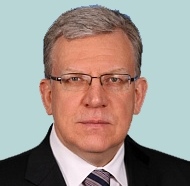
MAN OF THE MONTH: ALEXEI KUDRIN


Current Auditor General and former long-time minister of finance of the Russian Federation, Alexei Kudrin has always positioned himself between constantly feuding sectors of conservatives and liberals within the Russian corridors of power. Kudrin also happened to work at St.Petersburg City Hall at the same time as Vladimir Putin. Both were Deputy Mayors under then Mayor Anatoly Sobchak, Putin’s acknowledged mentor.
As a highly qualified and respected economist, Kudrin always skillfully resisted rapid increases in the Russian military budget. That opposition eventually pitted him against powerful heads of the Russian military industrial complex and upper echelons in the Ministry of Defense. He was a champion of raising retirement age to 62 for women and 65 for men aligning Russia's pension policies to that of other European states. The then Russian president Dmitry Medvedev, in order to secure shallow populist appeal among voters, publicly denounced and fired Kudrin from the government.
Vladimir Putin, when he took over from Medvedev as President, in recognition of Kudrin's abilities made him one of his economic advisers and recently appointed him Auditor General, a position where he does not come under the supervision of his rival Dmitry Medvedev, but in which he can play a significant role in the management of government affairs. Currently Alexei Kudrin is in charge of the main scourge of Russian life,-deep and institutionalized corruption.  Kudrin
Some observers believe that Alexei Kudrin still has a political future when Putin will finally let Medvedev go.
--o--

JOHN McCAIN (1936-2018)


Now that he has passed away after a long illness, it would be Inappropriate and disrespectful to go after John McCain policy record. Historians will have plenty of time to do this later.

The fact is that he developed a reputation of great integrity and that he was a significant figure in US foreign policy for virtually the whole time of his tenure as a member of the US Senate. It is not to disparage John McCain to observe that there might not have been the same outpouring of sympathy and admiration for him had any other person than Donald Trump been the US President. McCain’s honesty and human qualities so contrast with what we see everyday of the street-smart President that his departure is felt even more deeply.

No doubt on the basis of his own personal experience in Vietnam, McCain was to the end of his life, a believer in the role of America as the liberator of oppressed people. This put him in diametrical opposition to Vladimir Putin. McCain was in the room when Vladimir Putin delivered his famous 2007 Munich speech in which it went after the very US foreign policy for which McCain was one of the most fervent apologists. The relationship between them was never going to be friendship. McCain instead befriended those he saw as standing up to Russia, especially former Georgian President Saakashvili and current Ukrainian President Poroshenko. His views of Russia were probably summarized in one of his most famous quotes: "It is a gas station run by a mafia that is masquerading as a country ».

Official Russian coverage of McCain death was initially matter-of-fact. Itar Tass for instance simply finished its relevant news item by this line: “McCain was one of the staunchest supporters of anti-Russian sanctions and was known for his harsh criticism of Moscow”. A few legislators even had some kind words about McCain’s character. Others were not so kind and went as far as to call him a war criminal. One news channel even recalled that it was a Russian missile that downed McCain aircraft over North Vietnam, living the reader to draw his own conclusions about the true reasons for McCain’s disdain for Putin’s Russia.

The comment has been made that even after McCain there would be to advocate similar policies. For now, there is certainly no one of his stature.

--o--

BRIEFLY NOTED


RUSSIA


In an unusually lengthy and somewhat dramatic address to the nation, President Putin acknowledged that the planned pension reform was too drastic and painful. In its original form the pension reform proposal, that had been suddenly introduced on the opening day of the recent World Cup in Russia, foresaw that the retirement age for women would be raised from 55 to 63 and for men from 60 to 65. This announcement triggered an unprecedented wave of social protests. Apart from economic hardships, those changes touched a nerve with most Russians because the pension system introduced in 1932 remained a sort of sacred cow in a country with low life expectancy. Taking into account popular discontent, Putin offered a compromise by which the retirement age for women will go up to 60 instead of 63. For men it will however still move up to 65.
Putin's main motivation behind this move was his desire to curb the fall of his approval rating that which has been steadily coming down and now hovers just above 60%.

UKRAINE


Kiev and self-proclaimed breakaway republics in Donbass have announced back-to-school ceasefire. While the hostilities somewhat subsided the conflict continues. President Macron's unexpected statement on the Ukrainian crisis, that was not well received in Ukraine, suggested that the US-backed idea of bringing international peacekeepers to Donbass should be scrapped for the time being. According to Macron, it would be better to concentrate on the realization of Minsk agreements in closer cooperation with Russia.

US-RUSSIA


Russian Security Council Secretary Nikolai Patrushev and US National Security Adviser John Bolton met in Geneva on August 23rd  for a prolonged, substantial and, according to Russian sources, constructive discussion. According to Bolton, the discussions covered “the whole range of issues that the two countries have on non-proliferation, on arms control, on a range of bilateral issues, counterterrorism, illegal immigration, cyber-related issues, regional issues, like Syria, the broader Middle East, Afghanistan, and Ukraine”. There was no joint statement at the end of the meeting on account of the disagreement over whether or not Russia meddled in US elections.

CHINA


In an unusually sharp rebuke to President Trump's recent assertion of China's alleged secret assistance to North Korea in their attempts to circumvent its obligations the Chinese Foreign Ministry condemned the tone and substance of American accusations. China however continues to be the main provider of food and fuel to North Korea and has no intention to break its historic ties with the regime in Pyongyang.

CZECH REPUBLIC


Milos Zeman, president of Czech Republic has become first leader of the EU country to call for lifting economic sanctions against Russia. According to Zeman, both the European countries and Russia are losers in that lengthy and futile practice. Zeman might be the first EU head of state to openly voice his opposition to the anti-Russian sanction, but he is not alone because a number of his European counter-parts (specifically in Italy and Austria) may not be saying it outright but nevertheless quietly support this idea.

SAUDI ARABIA


Media reports from Saudi Arabia say Crown Prince Muhammad bin Salman has met with the visiting leader of Russia's Chechnya region, Ramzan Kadyrov. The reports said the talks were held at Mina Palace in Jeddah in August 21, with the crown prince and Kadyrov exchanging regards on the occasion of the Muslim holiday of Eid al-Adha. Kadyrov has made private visits to Saudi Arabia and several other Middle Eastern countries in recent years, leading commentators to conclude that Russia is using the head of the mostly Muslim-populated North Caucasus region to promote Kremlin interests among the influential leaders of the Arab world. Saudi Arabia has recently increased its investments in Chechnia's oil industry and number of religious institution, mosques, Islamic schools and cultural centers.


THE AUTHORS


Ilya Gerol, former foreign editor of the Citizen in Ottawa, syndicated columnist in Canadian, US and European media specializing in international affairs. His particular area of expertise includes Russia, Eurasian Economic Union, Eastern and Central Europe.  Ilya Gerol has written several books, one of them, The Manipulators, had become a textbook on relations of media and society.

During his career in the Canadian Foreign Service, Gilles Breton had three assignments at the Canadian Embassy in Moscow. His first posting there began during the Soviet period, in 1983. His last was from 2008 to 2012 as Minister-Counsellor and Deputy Head of Mission. He also served as Deputy Director responsible for Canada’s relations with Russia from 2000 to 2008. As an international civil servant, he was Deputy Director of the OSCE Office for Democratic Institutions and Human Rights in Warsaw from 1994 to 1997.


Tuesday, July 31, 2018

Issue 21

THE BRETON/GEROLNEWSLETTER


HELSINKI SUMMIT: NEW INSIGHTS AFTER THE DUST HAS SETTLED


Presidents Trump and Putin, Helsinki, July 16th
©President of Russia Website


Now, as the wave of indignation and wide-ranging accusations against Trump, not all of them evidently unfounded, has subsided, we can calmly discuss the outcome of that controversial meeting. Former State Secretary Henry Kissinger recently said that the Helsinki summit had to take place in any event, yet Trump's approach, as all of his foreign policy in general, marks the beginning of a new geopolitical era. Unfortunately, Kissinger added tongue in cheek, Trump most likely is not even aware of it. 

Trump, in his awkward ways, is trying to re-introduce a series of bilateral agreements by circumventing old political and military alliances. Some of them were introduced a long time ago at a time of totally different political realities and, according to Trump's thinking, exist mainly due to American financial and military assistance. As well, the Administration in its heart of hearts believes the real threat to the West comes from a re-surging China, not Russia.

In fact the Helsinki Summit had two agendas; one for the immediate public consumption that included Russian involvement in American elections (Trump agreed with Putin that there was no involvement by Russians at the state level, though later under pressure Trump said he misspoke), cooperation on Syria in connection with the security of Israel.

Two weeks after the summit we are beginning to gather more information of the most important part of that meeting-what was said behind closed doors. Trump and Putin made some attempts to find a compromise on the most acute crisis in Europe, the one that divides West and Russia more than anything else,-Ukraine. Mike Pompeo informed the Senate that Trump and Putin agreed to disagree on the Ukrainian issue. Moscow suggested holding a referendum in Donbass (that includes two unrecognized Donetsk and Lugansk republics) under international supervision on the political future of that region. Washington in turn offered to provide 20 to 40 thousand international peacekeepers for the Donbass region and international administration without any NATO or Russian representation.

There was no agreement reached on that issue, but at least it could be offered to Ukraine for consideration and discussed at the upcoming Normandy format meeting between foreign ministry representatives of France, Germany, Ukraine and Russia.

Not widely publicized but discussed during the summit's closed door session was the nuclear disarmament issue.

The New START treaty signed between then Russian President Dmitry Medvedev and then U.S. President Barack Obama in 2010 will not survive automatically on its own. The agreement, which reduced the number of strategic nuclear weapons to 700 deployed launchers and 1,550 warheads, is set to n expire on February 5, 2021, if it is not prolonged by decision of the parties. Should this come to pass, the multi polar international system will be thrown into chaos.

To prevent a disastrous clash, the two countries need to maintain and strengthen the arms-control safety net. This also includes resolving disputes over the implementation of the Intermediate Nuclear Forces Treaty (INF) a cornerstone of European security. That is why it is necessary to resume the Russia-US dialogue that will lead to official negotiations. For now, the agenda should be narrow, prioritizing three key issues: the prolongation of the New START treaty, the preservation of the INF Treaty, and the prevention of dangerous military accidents.

With this in mind, and brushing aside internal American squabbles and concerns, real or not, on the merits of the Russian involvement in 2016 American elections, the Trump administration had decided to invite Vladimir Putin to Washington for another summit where those concerns, mainly nuclear safety, reduction and arms race control would be high on the agenda.

However the next summit between Trump and Putin was abruptly postponed by the Administration in order to give Mueller Inquiry time to conclude its investigation into Russian election meddling. As John Bolton, National Security Adviser, put it: “The President believes that the next bilateral meeting with President Putin should take place after the Russia witch hunt is over, so we have agreed that it will be after January 1st, 2019".


Presidents Trump and Putin, Helsinki, July 16th
©President of Russia Website


--o--

IRAN-SYRIA ISRAEL FOOTNOTE


Donald Trump may like to present himself as the best friend of Israel. In the discussions around military developments in the south of Syria and their impact on the security of Israel, it is, however, far from clear that he is the main player. President Putin and Prime Minister Netanyahu have been frequent interlocutors and seem to have developed a strong relationship. Once they have had their discussion about what to with Iran in Syria, one has the impression that they will play Trump, but not expect him to influence decisions. This leaves Trump to do the posturing, that he does rather well. Unfortunately, it also can incite him to believe he has to take the initiative on the broader issues underpinning the US-Iran conflict. His recent offer to meet Iranian President Rouhani is consistent with his belief that he personally can resolve any problem. After North Korea, US national security specialists may be in for another interesting ride.


--o--

LIAR, LIAR OR MR. TRUMP’S TRUTH MANAGEMENT SKILLS


After his controversial statement during the press conference following his meeting with Vladimir Putin in Helsinki on July 16th, Donald Trump was accused of high treason by John Brennan, the former head of the CIA, for appearing to believe the Russian President more than his own intelligence services on the matter of Russian meddling in the 2016 US presidential election.
Despite Trump’s later explanation about having meant to use a double negative, it is abundantly clear that he indeed believes Putin more than US intelligence. For him, though, this is not a matter of disloyalty to the US security establishment. This is a matter of him believing what suits him best, what he wants to believe. The US intelligence story would suggest that Russia influenced the outcome of the Presidential election in several ways. For Trump the legitimacy of his presidency and the belief that he won “hugely” matter more than the truth, in this case as in many others.

Ironically, one learns more about the Russian meddling in the 2016 election from Putin’s interview with Fox News later on the day of the Summit than from any of Trump’s statements. Whereas Putin expectedly denies any official Russian government involvement in the election, he avoids, as before, denying involvement by Russians in the hacking of Democratic National Committee (DNC) email servers. Instead, rather than addressing the issue head on, he keeps insisting on the fact that the emails that were eventually made public are a true record. In other words, Russians most likely did it, but, by getting access to the emails and publishing them, only made the truth available to the American public. In Putin’s mind, this is clearly a lesser sin, if one at all. Whether Trump likes it or not, Russian hackers exposing the duplicity of the DNC and, separately but even more, FBI Director Comey’s last minute flip-flop on Hillary Clinton’s emails had an influence on the election outcome. By comparison, the alleged Russian use of social networks appears much less significant in terms of its overall scope and impact.


Presient Putin interviewed by Fox News/Chris Wallace, July 16th
©President of Russia Website


Putin’s virtual back-door admission of a general Russian responsibility for hacking the DNC servers, but not of a Russian government specific action, would be good enough for Donald Trump, even though it would be difficult for him to admit that he owes even part of his Electoral College victory to Russia. For Trump’s adversaries, confining Russian responsibility to one successful but relatively circumscribed action and attributing it to non-government actors is far from satisfactory. To many, it might indeed be inconceivable to believe that there are non-state actors in Putin’s Russia. The incident also inconveniently exposes some Democratic Party leaders’ questionable behaviour. One should bear in mind, however, that Robert Mueller’s investigation mandate includes finding possible links between Donald Trump’s campaign and the Russian government, the collusion that Trump constantly denies. Ultimately, despite the serious allegations supported by US intelligence and already 15 months of work, Mueller may never find anything that can reasonably be prosecuted in a US court, but the scrutiny to which it exposes Trump’s entourage has already revealed enough turpitude and poor judgment to justify its continuation. For Trump’s political opponents, the Mueller inquiry serves too many purposes to be abandoned. To them, the fact that the current climate prevents the President from taking any significant, even necessary, new Russia-related initiative and that it essentially makes US-Russia relations dependent on a highly partisan US debate is only collateral damage. The above-mentioned postponement of the proposed Putin visit to Washington is only an example of that.

--o--

TRUMP'S TRADE WARS-UPS AND DOWNS


After announcing the raise of tariffs on aluminum and steel produced in Canada, China, Russia and Europe President Trump continues to threaten to introduce even harsher measures against European cars imported to the US. The main target of his trade hostilities has become China; he announced his intentions to apply higher tariffs to all goods imported from China. Trump's calculations are based on the fact that China is no position to reciprocate in kind; Chinese exports to the US by far exceed the stream of American goods to China. Yet Beijing, according to insiders, is preparing to retaliate in different way: Chinese are ready to withdraw almost a trillion dollars’ worth of investments in the US economy and banks.

In a most unexpected twist of his global trade war, Trump recently announced that he could be ready to abolish all tariffs if other trade partners would do the same.

Jean-Claude Juncker, the chairman of European council, had commented: every madness has a system. The correctness of this statement had been immediately confirmed by Trump's sudden suggestion, during his meeting with Juncker in the White House, that all tariffs between US and EU could be abolished should both sides agree to it. In fact such a radical measure cannot even be implemented without long and painstaking negotiations. The situation is made even more unrealistic by the fact that tariffs on Canada, Mexico and China are already in place.

--o--

UKRAINE  UPDATE


There may be some perverse irony, but there is also some astuteness in the alleged Russian proposal to hold a popular democratic referendum in the rebel regions of Eastern Ukraine to ascertain the wishes of the population as to its political future. Russia was not unaware of the fact that the proposal would be met with a negative reaction in Kyiv. Its rejection is not a surprise. It, however, serves to highlight the fact that there is no political support in Kyiv for a negotiated political settlement of the conflict with the rebel regions, to the point where direct political dialogue with the leaders of the rebel regions is anathema. In that context, the idea of the referendum would be formally to bypass the rebel authorities and hear directly from the people living in the region and give them a voice in the attempts to settle the conflict. Such a “concession” is not currently acceptable to Kyiv authorities. With the presidential and parliamentary elections around the corner, the likelihood of a substantial change in Kyiv’s position is even more unlikely. There is, however, the outside chance that one influential oligarch might pick up on the idea. The Russian proposal, in any event, puts Kyiv on the defensive. As a central government apparently unwilling to hear the views of the inhabitants of one of its regions, it puts Ukraine in the same camp as Spain in its conflict with Catalonian independence partisans. All in all, Russia has lost nothing by making the proposal, but has scored if nothing else a small political argument.

The allegations to the effect that the current authorities in Kyiv harbour a significant number of fascists, anti-Semitic or xenophobic elements have often been written off as part of the Moscow propaganda. Granted, the composition of the Ukrainian government and the historical views of some of its members do not change substantially the nature of its current conflict with Russia. Nevertheless, the glorification of certain WWII actors that are considered in Ukraine as national heroes, but are considered elsewhere, including in other countries such as Poland and Russia, as war criminals will not cease to be a most controversial and sensitive issue. So is the relative greater frequency of a political discourse that is associated with far-right ideas, even though it should be noted that such a discourse also exists in neighbouring countries. The recent occurrence of racially-motivated incidents and the publication of articles in the Western press condemning them has highlighted the problem and the fact that it is not exclusively a matter of Russian propaganda. This in itself will not change the course of events or the support Ukraine unconditionally receives from its North American allies. It can, however, have a long-term impact on the public opinion debate in which Ukraine has been doing very well so far.

On the separate matter of Crimea, cracks are continuing to appear in the relatively unanimous support Ukraine initially received. Matteo Salvini, Italy’s Interior Minister and once political ally of Marine Le Pen, created an uproar by his statement that referred to “some historically Russian zones with Russian culture and traditions which legitimately belong to the Russian Federation” as well as to the legitimacy of the 2014 Crimea referendum. He was critical of the Crimea-related sanctions calling them “not useful and as hurting Italian exports”. He also went as far as to call the 2014 Ukrainian revolution a "pseudo-revolution financed by foreign powers". Italian Foreign Minister Enzo Moavero Milanesi swiftly replied by reiterating Italy’s support for the EU position on Crimea and that Rome "respects" Ukraine's right to sovereignty.

We had already reported on President Trump’s remarks about Crimea “being Russian because they speak Russian there”. In the aftermath of the Putin Trump Summit, Secretary of State Pompeo had to reiterate publicly and firmly the US position on Crimea. Canada did it a few days later. Rumours will nevertheless continue to circulate about a possible Crimea/Donbass trade-off between Ukraine and Russia. Such a trade-off remains unlikely, at least for the foreseeable future.


President Poroshenko, Mrs. Poroshenko leading the procession
Kyiv, July28th
©President of Ukraine Website


The public celebrations on the occasion of the1030th anniversary of the adoption of Christianity in lands that are now part of Belarus, Ukraine and Russia highlighted once more the political sensitivity of jurisdictional issues in the Ukrainian religious domain. On the occasion of this solemn anniversary, two separate processions were organised in Kyiv, the first one by the Church that remains affiliated to the Moscow Patriarchate, the second one by the two independent Ukrainian churches. There was a large difference of opinion between the organisers and the police authorities as to the level of attendance for the first procession (250,000 vs 25,000). President Poroshenko attended the second one and reiterated the call for the recognition of an independent Ukrainian Orthodox Church by the Patriarch of Constantinople. Yet, Poroshenko’s activism on religious matters does not seem to have had any effect on his popular rating.

--o--

BRICS-ONE OF THE ALTERNATIVES IN THE MULTI-POLAR WORLD

BRICS family photo, leaders andi nvited participants, July 27th


The July summit of BRICS (Brazil, Russia, India, China and South Africa) in South Africa stressed the necessity to develop closer cooperation between its members with the objective to become a financial and industrial hub that could attract more members and partners. The financial locomotive of this organization is naturally China. Together with Russia, Beijing will increase the role of high technology in that group in order to work towards some competitive level with such alliances as the EU and ASEAN.

According to the latest information Turkish President Erdogan applied for his country's membership in this group. Apart from the substantial economic weight that Turkey carries, Ankara joining BRICS would solidify this alliance's political significance. This turn of events takes on special significance in light of Turkey's repeated statements that the country may consider leaving NATO.

--o--

OIL AND POLITICS


Rebels in Yemen attacked two Saudi oil tankers in Bab-el-Mandeb strait and forced them to return to port. Riyadh decided to take their oil through the Red Sea, a lengthier route that will surely increase transportation costs and consequently oil prices at world markets. At the same time India, one of the most stable buyers of Iranian oil has announced its decision to decrease its purchase of Iranian crude in favor of Saudi or Russian suppliers. Major international industrial companies hastily retreating from Iran are not even waiting for November 4th, the deadline for American sanctions against Iran to come into effect. This has already brought the Iranian currency to its lowest level in 15 years. The Iranian government reacted by introducing strict hard currency exchange rules. This in turn will contribute even more to the currency's downfall and worsen the economic situation in the country. There is little doubt that Iranians will come out to the streets to protest economic hardships. Many political observers believe that Tehran will provoke a military clash or even a war at Hormuz or Bab-el-Mandeb straits, to deflect popular attention by whipping out nationalism, to suppress dissent and also to help increase oil prices.


--o--

WORLD CUP TOURISM


For Russia as the host country, this year’s edition of the World Cup of Football was a success, only mitigated by the defeat of its national team in quarter finals. The fact that the defeat was in overtime, at the hands of Croatia, and that the Russian team accomplished much more than expected softened the blow.

Media widely reported that a large number of the first-time visitors to Russia were suitably impressed by the welcoming nature of the country and by the efficient organisation of the tournament. Many observed on the contrast between the image of Russia as presented in Western media and the reality they could observe with their very eyes. President Putin himself could not resist mentioning it. The impact of the World Cup 2018 on the image of Russia will not wipe out overnight any disagreement Russia may have with its Western adversaries. It may however affect the tone of the world media coverage in the long term.

--o--

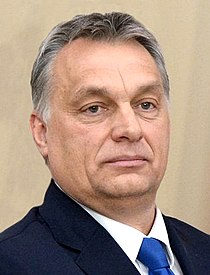
PERSON OF THE MONTH:

 VIKTOR ORBAN


The controversial Hungarian Prime Minister has become one of the most talked about political leaders in Europe. Media likes to describe him as "Soft Eurosceptic". On some issues he is not so soft: he leads the anti-Ukrainian campaign in NATO and the EU on account of the alleged discrimination against Hungarian speakers in the Carpathian region of Ukraine. Orban leads the Eastern European opposition to the mass influx of illegal migrants from the Middle East, Africa and other Third World countries. His opposition to EU immigration policies, widely condemned by most Western countries, is based on his vision of security and cultural balance inside Hungary.
Orban is largely supported in Slovakia, the Czech Republic, Poland and by some populist parties in Western Europe.

Born in 1963, Viktor Orban transformed himself from a young communist at the age of 15 to an established conservative leader of his country. He maintains a balance between Hungary's membership in NATO and the EU with good relations with Moscow. Also, in spite of some accusations of antisemitism, Orban became the first European leader to officially visit and pray at the Western wall in contravention of long standing EU policy that considers this part of Jerusalem occupied territory.

--o--

BRIEFLY NOTED


RUSSIA


The unpopular pension reform that was cleverly introduced without too much fanfare during the World Cup of Football has now triggered mass demonstrations in Russia cities. The protests are led by the Communist Party and other left wing political organizations that are coming back from political oblivion by riding the wave of current rallies. The Russian government, bearing in mind historical precedents in the country, takes such demonstrations seriously. It was therefore decided to re-work certain provisions of the reform and to delay the vote in Parliament.

UKRAINE


According to sources in Minsk where the contact group on Donbass conflict had an emergency meeting there is a planned exchange of political prisoners between Russia and Ukraine slated for August 2018. This means that Oleg Sentsov, the Ukrainian film director who was sentenced by a Russian court to 20 years for "terrorist activities" and whose release was demanded by many across the world finally could be freed.

RUSSIA-SYRIA 


Meeting in the Russian Black Sea resort of Sochi, representatives of Russia, Iran, and Turkey have kicked off two days of talks on issues related to the war in Syria. The gathering comes as Turkey announced on July 29 that it is planning to hold a summit with France, Germany, and Russia in early September to discuss the Syrian conflict and other regional issues. The Russian delegation in Sochi is headed by the Kremlin's special envoy for Syria, Aleksandr Lavrentyev. Iranian Deputy Foreign Minister Hossein Ansari and his Turkish counterpart, Sedat Onal, were also expected to attend, along with the UN special envoy for Syria, Staffan de Mistura, and representatives of Syrian President Bashar al-Assad’s government.

ARMENIA


Former ex-president Kocharyan was detained in Yerevan on charges of bribery and money laundering. This announcement comes amid large scare anti-corruption measures by the new Government of Nikol Pashinyan, that came to power on the wave of mass street demonstrations. Scores of current and former Armenian politicians were recently purged or arrested on various corruption and abuse of power charges.

KAZAKHSTAN-KYRGYZSTAN 


Kazakh Defense Minister Saken Zhasuzaqov traveled to Bishkek on July 25, making the first official visit by a Kazakh defense chief to Kyrgyzstan since the two Central Asian nations gained independence in the 1991 after the collapse of the Soviet Union.
Zhasuzaqov's talks with the chief of the Kyrgyz armed forces' General Staff, Raiymberdi Duishenbiev, focused on regional security and military cooperation, the Kyrgyz military said. An agreement on military intelligence cooperation was signed after the talks.
The two countries are members of the Collective Security Treaty Organization (CSTO) along with Russia, Armenia, Belarus, and Tajikistan.

SOUTH OSSETIA

Syrian President Bashar al-Assad has met with the visiting head of the Georgian breakaway region of South Ossetia on July 23rd, two months after Damascus become one of only a handful of countries to recognize the region's declared independence.

Assad's office revealed that Anatoly Bibilov, the de facto president of South Ossetia, was in Syria on a three-day visit. Assad thanked him for backing his government in its seven-year civil war against various rebels and for recognizing Syria's "sovereignty" and "unity." Venezuela, Nicaragua, and the Pacific island of Nauru are the only other states that have also recognized Abkhazia and South Ossetia as independent states.


--o--

THE AUTHORS

Ilya Gerol, former foreign editor of the Citizen in Ottawa, syndicated columnist in Canadian, US and European media specializing in international affairs. His particular area of expertise includes Russia, Eurasian Economic Union, Eastern and Central Europe.  Ilya Gerol has written several books, one of them, The Manipulators, had become a textbook on relations of media and society.

During his career in the Canadian Foreign Service, Gilles Breton had three assignments at the Canadian Embassy in Moscow. His first posting there began during the Soviet period, in 1983. His last was from 2008 to 2012 as Minister-Counsellor and Deputy Head of Mission. He also served as Deputy Director responsible for Canada’s relations with Russia from 2000 to 2008. As an international civil servant, he was Deputy Director of the OSCE Office for Democratic Institutions and Human Rights in Warsaw from 1994 to 1997.